
WAGE GARNISHMENT IN CALIFORNIA — What Debt Collectors Don’t Want You to Know
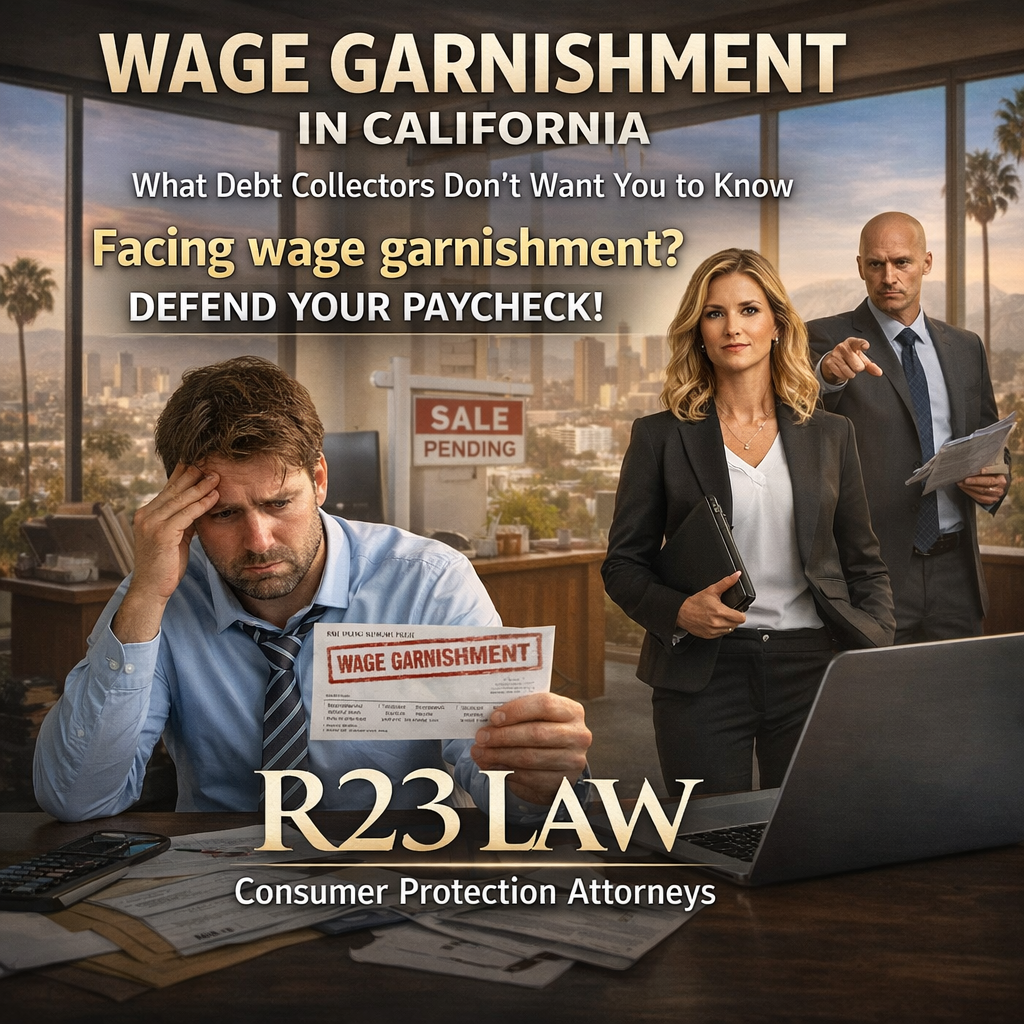
Facing wage garnishment in California?
Learn your rights, limits, and how R23 Law’s California Consumer Protection Attorneys defend your paycheck from aggressive debt collectors.
When Creditors Come for Your Paycheck: Know the Law, Protect Your Income
Wage garnishment isn’t just stressful—it can strip away the income you need for rent, food, and family essentials. In California, debt collectors must follow strict rules before they can take a slice of your paycheck, and understanding those rules gives you power.
At R23 Law, our California Consumer Protection Attorneys help clients fight back against unlawful wage garnishment and protect what they’ve worked hard to earn.
What Is Wage Garnishment in California?
Wage garnishment is a legal process where a creditor takes part of your paycheck to collect on a debt. In most cases, a creditor must:
Sue you in court
Win a judgment
Obtain a wage garnishment order
Once that’s done, they can legally request a portion of your wages through your employer.
But that doesn’t mean they can take everything—or that you’re out of options.
Know the Limits: How Much Can They Take?
California law protects most of your income from garnishment. Creditors can only take:
Up to 20% of your disposable earnings, or
The amount by which your weekly earnings exceed 40x the state minimum wage—whichever is less.
That means at least 80% of your paycheck is shielded from creditors in most cases.
These limits apply to most types of debts, including:
Credit card debt
Medical bills
Personal loans
Unpaid taxes
Private student loans
(Note: Child support and federal student loans follow different rules.)
How Wage Garnishment Works in California: Step by Step
Creditors must follow a multi-step legal process before any money can be taken from your paycheck:
Get a court judgment against you
Request a Writ of Execution
File for an Earnings Withholding Order
Notify your employer and initiate garnishment
You have the right to challenge this process—especially if the debt is inaccurate or the garnishment causes financial hardship.
Your Rights Under the Law
During the garnishment process, you have several key protections:
Claim of Exemption: File this with the court within 10 days of receiving the notice if garnishment would prevent you from affording basic necessities.
Hearing Rights: The court will review your exemption request and may reduce or cancel the garnishment.
Employer Protection: Your employer can’t fire you for a single wage garnishment order.
These steps ensure that garnishment doesn’t strip you of your ability to survive.
Protecting Yourself from Predatory Debt Collection
The Fair Debt Collection Practices Act (FDCPA) offers powerful protections. It prohibits:
Harassment or abuse
False threats of wage garnishment
Contacting you at work (if you’ve requested they stop)
Calling before 8 a.m. or after 9 p.m.
If a collector violates these rules, you may be entitled to damages—and R23 Law can help you file complaints or lawsuits under the FDCPA.
Proven Strategies to Stop or Reduce Garnishment
Wage garnishment isn’t inevitable. You may be able to:
File a Claim of Exemption
Protect more of your wages by proving financial hardship.
Negotiate with Creditors
Many creditors prefer a lump-sum payment or payment plan over a court battle.
Explore Debt Relief Options
Bankruptcy or debt consolidation may be viable alternatives, depending on your financial situation.
Get Legal Advice Early
R23 Law’s California Consumer Protection Attorneys can step in before garnishment begins—or reverse it after it’s in place.
Final Thoughts: Timing Is Everything
Wage garnishment can hit fast and hard—but legal protections are on your side. Whether you're facing aggressive debt collection or already dealing with a garnishment order, don’t wait to take action.
R23 Law helps clients across California defend their paychecks and challenge unfair or unlawful garnishment tactics. From negotiating with creditors to filing exemption claims, we provide the experienced legal support you need to stay financially secure.
Get Your Paycheck Back on Track
📞 Contact R23 Law’s California Consumer Protection Attorneys today for a free consultation and take control of your income.
