
WIRED OUT, FOUGHT BACK – Fraudulent Wire Transfers, Bank Fraud Disputes, And California Consumer Protection Claims
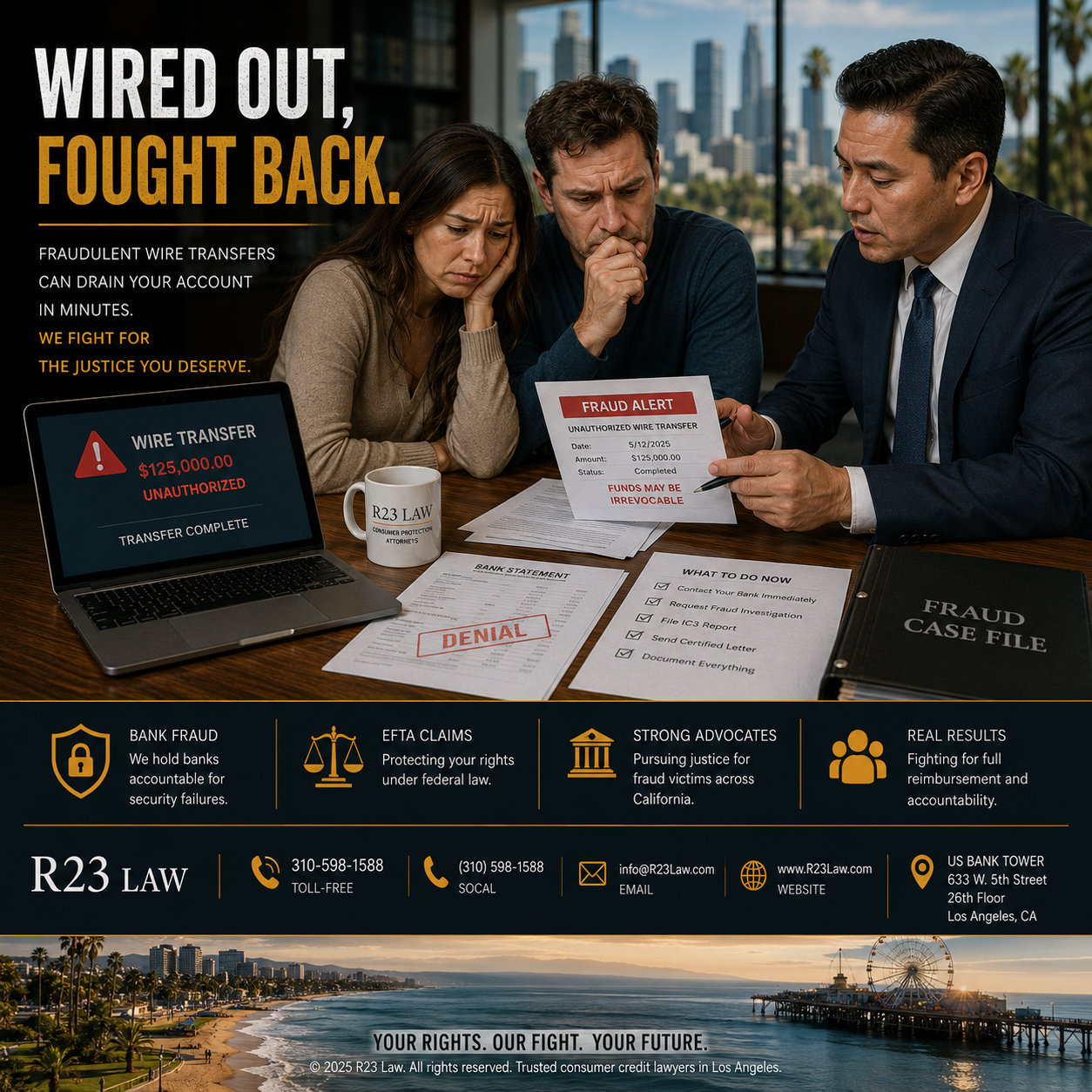
Fraudulent wire transfers, hacked escrow instructions, phishing scams, and account takeover fraud can drain consumer accounts fast
R23 Law's California Consumer Protection Attorneys represent Californians in bank fraud disputes, unauthorized transfer claims, EFTA matters, and consumer finance litigation.
Wire Transfer Fraud Moves Fast
Fraudulent wire transfers can drain an account in minutes. Scammers often rely on urgency, impersonation, hacked emails, fake websites, and emotional pressure to convince consumers to send money to the wrong account.
The attached source explains that modern wire transfer fraud has evolved from older email scams into more sophisticated cyber fraud, including real estate email hacks, website mimicking, phishing, and remote-access schemes.
R23 Law's California Consumer Protection Attorneys represent consumers facing unauthorized wire transfers, bank fraud disputes, scam-related account losses, and financial institutions that deny valid fraud claims.
Wire Fraud Is Often Built On Trust
Wire transfer fraud usually works because the request appears legitimate. A scammer may pose as a real estate agent, escrow officer, bank employee, employer, business partner, family member, government representative, or trusted company.
The attached source describes wire fraud as a form of psychological manipulation, where scammers convince victims to wire funds to an account controlled by the scammer instead of the intended recipient. It also notes that fraud can occur when a scammer gains remote access to a computer and transfers money without consent.
Common wire fraud scenarios include:
Fake escrow or real estate wire instructions
Hacked email accounts
Slightly altered email addresses
Phishing websites that imitate banks or major companies
Remote access scams
Urgent family or emergency impersonation scams
Business email compromise
Account takeover fraud
Fraudulent payment instructions sent at the closing stage of a transaction
Real Estate Wire Fraud Can Be Devastating
Real estate transactions are especially vulnerable because they often involve large wire transfers and tight deadlines. The attached source explains that scammers may hack or monitor communications involving a real estate agent or escrow officer, then send fake wire instructions using a similar email address, copied writing style, logos, and signatures.
By the time the consumer realizes the instructions were fraudulent, the money may already be transferred, withdrawn, or moved through several accounts.
For victims, the loss can mean stolen down payments, delayed closings, lost homes, and severe financial injury.
R23 Law's Expert Legal Services For Financial Injury Victims Throughout California
R23 Law's California Consumer Protection Attorneys evaluate fraudulent wire transfer cases involving banks, credit unions, payment platforms, escrow-related fraud, account takeover, phishing, and unauthorized electronic transfers.
Our legal services may include reviewing bank records, wire instructions, email communications, transaction histories, fraud reports, denial letters, security procedures, dispute timelines, and whether the financial institution followed applicable federal or state law.
Consumers can learn more about the firm through About R23 Law, meet the attorneys through Our Team, or begin a case review through Contact Us.
Bank Liability After Unauthorized Wire Transfers
Banks often blame consumers after fraudulent transfers. The attached source notes that financial institutions may argue the consumer shared login information or point to account terms and conditions. It also explains that banks may still be liable for unauthorized transfers when applicable law requires security procedures and the bank fails to follow them.
Depending on the transaction, the facts may involve:
Uniform Commercial Code Article 4A issues
Electronic Funds Transfer Act claims
Bank security procedure failures
Unauthorized transfer disputes
Failure to follow agreed authentication procedures
Failure to investigate after fraud notice
Improper denial of reimbursement
Mishandling of receiving-bank fraud notices
The legal path depends on the account type, transfer method, timing, authorization facts, and bank conduct.
Immediate Steps After A Fraudulent Wire Transfer
Speed matters. The attached source recommends contacting the bank immediately, telling the bank the transfer was not authorized, identifying where the money was sent, contacting the receiving institution, requesting a fraud freeze, filing an FBI Internet Crime Complaint Center report, and sending the bank a formal certified letter.
Consumers should preserve:
Wire transfer receipts
Bank statements
Emails with payment instructions
Screenshots of suspicious websites
Text messages and call logs
Fraud reports
IC3 complaint records
Certified mail receipts
Bank denial letters
Any provisional credit or investigation notices
Strong documentation can be critical when a bank refuses to reimburse stolen funds.
Red Flags Before Sending A Wire
Wire transfers are difficult to reverse, so verification before sending money is essential. The attached source recommends checking every letter of the sender’s email address, verifying phone numbers through official sources, confirming wire instructions directly, avoiding suspicious links, reviewing URLs closely, and watching for misspellings, poor grammar, or unusual timing.
Consumers should never rely only on email instructions for large transfers. A direct phone call to a trusted number or in-person confirmation can prevent catastrophic loss.
R23 Law's California Consumer Protection Attorneys Pursue Bank Accountability
Fraud victims should not be left alone after a bank denies responsibility. Financial institutions may have duties to investigate, follow security procedures, respond to disputes, and evaluate whether a transfer was truly authorized.
R23 Law's California Consumer Protection Attorneys pursue claims involving unauthorized wire transfers, fraudulent bank transactions, account takeover, phishing losses, real estate wire fraud, and wrongful denial of fraud disputes.
Strong Rights After Stolen Funds
A fraudulent wire transfer can create immediate financial harm. Consumers may lose savings, down payments, rent funds, business capital, or emergency money. When banks fail to respond lawfully or deny valid fraud claims without a meaningful investigation, legal action may be available.
R23 Law stands with California consumers facing bank fraud disputes, unauthorized transfer losses, and financial institution misconduct.
Contact R23 Law Today
Fraudulent wire transfers require fast action, detailed documentation, and experienced legal review. If your bank denied your fraud claim, refused reimbursement, blamed you for an unauthorized transfer, or failed to follow proper security procedures, R23 Law's California Consumer Protection Attorneys can review your rights and legal options.
Contact R23 Law Today Toll-Free — 310-598-1588 SoCal — (310) 598-1588 Email — info@R23Law.com Website — www.R23Law.com US Bank Tower, 633 W. 5th Street, 26th Floor, Los Angeles, CA
© 2025 R23 Law. All rights reserved. Trusted consumer credit lawyers in Los Angeles.
