
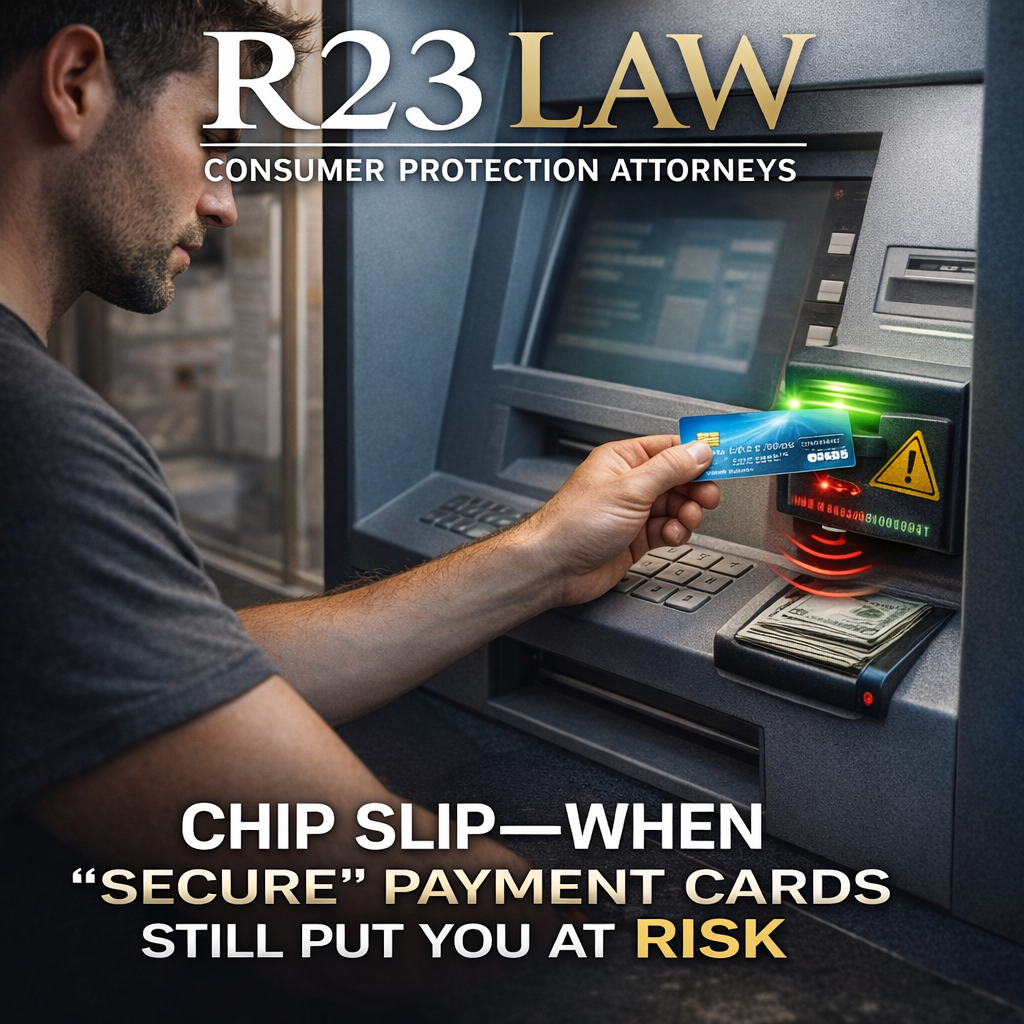
CHIP SLIP — When "Secure" Payment Cards Still Put You at Risk
The Illusion of Safety in a Chip
Chip-enabled credit and debit cards were designed to make transactions safer. Instead of relying on magnetic stripes, EMV chips create randomized data for each purchase, reducing the chance of your card being cloned.
But this promise of security has a catch. While chip cards help prevent some types of fraud, they aren’t foolproof. In fact, they’ve introduced new risks—and consumers in California are still paying the price.
At R23 Law, our California Consumer Protection Attorneys regularly help clients who have become victims of financial fraud even after "upgrading" to chip technology. It’s time to take a closer look at what chip cards protect you from—and what they don’t.
How Chip Card Fraud Happens
Chip cards rely on generating unique, one-time-use data per transaction. But while the data is randomized, it can still be intercepted if a hacker uses a skimming device to capture the information in real time. Skimmers are often hidden in ATMs, gas pumps, and point-of-sale terminals. Once your card data is captured, it can be transmitted wirelessly to another device—like a smartphone or cloned card.
What makes this worse? The U.S. implemented chip technology late compared to other countries, and instead of requiring retailers to upgrade, it introduced a liability shift in 2015. That means if a merchant failed to upgrade to chip-compatible terminals, they became liable for fraud. Many chose not to upgrade—leaving consumers like you vulnerable to theft during everyday purchases.
Smart Tips to Protect Your Card—and Your Identity
If you want to avoid becoming the next fraud victim, consider the following tips recommended in the document on page 2 of the PDF:
Use smartphone or smartwatch payment apps whenever possible—they’re harder to skim than cards.
Regularly check your bank statements for suspicious activity.
Report any unusual charges immediately. Time is critical when disputing fraudulent activity.
Avoid swiping your card at outdated terminals—insist on chip or contactless options when available.
At R23 Law, we also recommend placing fraud alerts on your credit file if you suspect any unauthorized use. We can guide you through that process.
When Security Fails, R23 Law Steps In
If your bank failed to protect your data or you’ve been denied a refund for fraudulent charges made via a chip card transaction, you may have legal options under the Fair Credit Billing Act (FCBA) or Fair Credit Reporting Act (FCRA).
Our team of R23 Law California Consumer Protection Attorneys can help you:
Dispute unauthorized charges
Seek reimbursement
File complaints against negligent businesses
Explore possible damages if your identity was stolen due to a breach or skimming device
Your Data Deserves More Than a "Chip and a Prayer"
Digital fraud evolves quickly, and outdated security standards can leave you exposed. If you believe your financial data was compromised despite using a chip card, don’t wait for the damage to spread. R23 Law Consumer Protection Attorneys is ready to help.
📞 Toll-Free: 310-598-1588
📧 Email: info@R23Law.com
🔗 Contact Us
We hold negligent companies accountable—and fight for the compensation you deserve when security systems fail.
