
FROM CREDIT FACT TO CREDIT FICTION — When Credit Reporting Errors Cost Californians Real Money
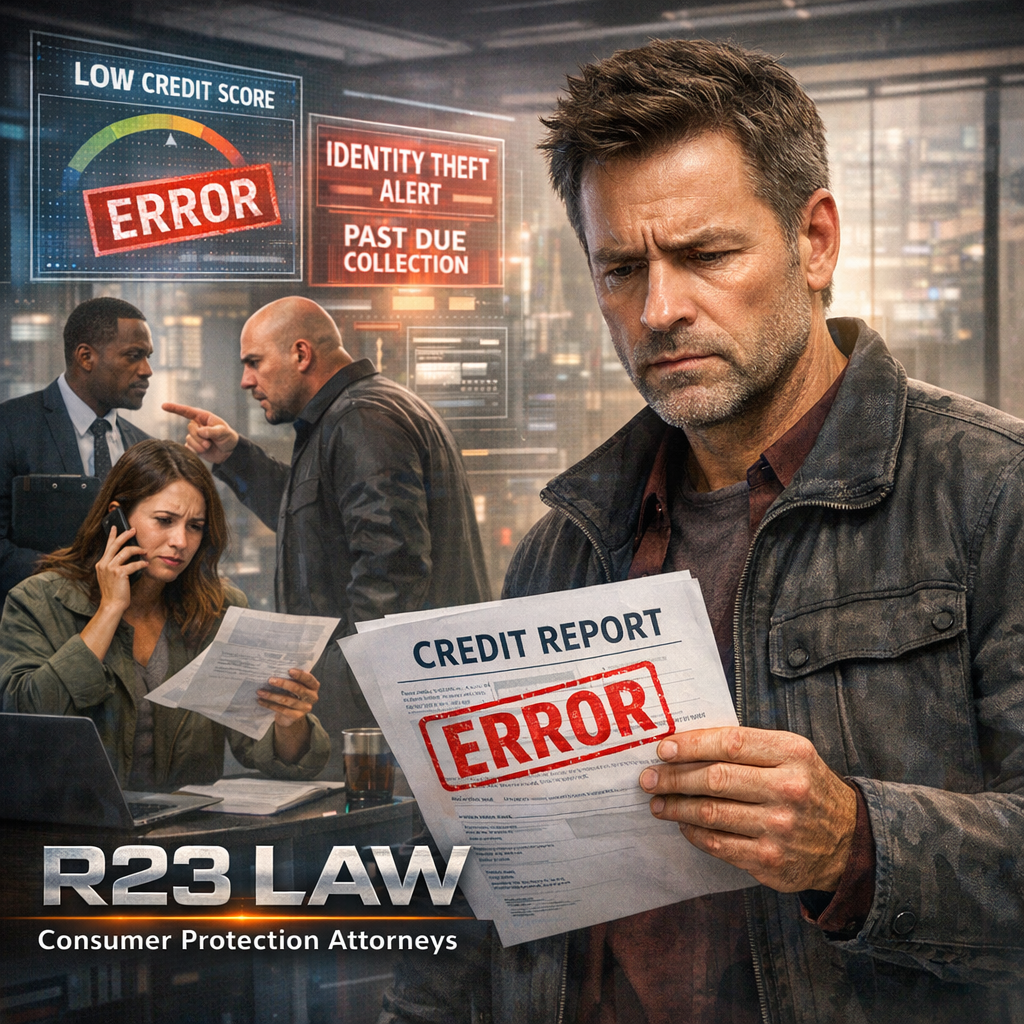
Credit reports are supposed to record facts, not fiction
But credit reporting errors in California can turn a false late payment, a mixed file, or an account that does not belong to you into a real financial problem. A bad tradeline can affect your score, your borrowing power, your housing options, your insurance costs, and in some settings even your employment prospects. That is why credit reporting disputes remain one of the most important corners of modern consumer protection law.
What starts as “just a mistake” can quickly become something much larger. A credit bureau keeps reporting bad information. A furnisher refuses to correct it. A debt collector starts chasing payment on a debt that never should have been tied to your name in the first place. Under the Fair Credit Reporting Act, consumers have the right to dispute incomplete or inaccurate information, and consumer reporting agencies generally must conduct a reasonable reinvestigation within 30 days after receiving the dispute.
The Most Common Credit Reporting Errors
The Consumer Financial Protection Bureau identifies a familiar set of problems: wrong identity information, mixed files, accounts created through identity theft, closed accounts reported as open, accounts incorrectly marked late or delinquent, inaccurate balances, and the same debt listed more than once. These are not technical foot faults. They are reporting failures that can distort a consumer’s entire financial profile.
In California, these issues often overlap with identity theft and debt collection abuse. A consumer may discover that a fraudulent account was opened, sold, and then reported again and again as though it were legitimate. By the time the consumer notices, the damage may already be showing up in lending, housing, and collection activity.
Why the FCRA Is Only Part of the Story
The FCRA is the core federal law for credit reporting accuracy and dispute procedures. But it is not always the only law in play. When a debt collector is trying to collect a debt that is not yours, or is using unlawful collection tactics while inaccurate reporting remains on your file, the Fair Debt Collection Practices Act and California’s Rosenthal Fair Debt Collection Practices Act may matter too. California Civil Code section 1788.17 incorporates many FDCPA standards and remedies for debt collectors collecting consumer debts in California.
The FDCPA also gives consumers important protections in collection disputes, including validation requirements, restrictions on certain communications, and a private right of action for violations. That matters because some credit reporting cases are not just about correction. They are about leverage, pressure, and unlawful collection conduct attached to false information.
What to Do When Your Credit Report Is Wrong
Start with the official source. AnnualCreditReport.com is the federally authorized website for free credit reports, and free weekly online credit reports are available from Equifax, Experian, and TransUnion. Review all three because each report may contain different information.
Then dispute the error with both the credit reporting company and the furnisher of the information. The CFPB states that consumers should generally contact both. Gather documents that support your position, keep copies of everything you send, and preserve every portal confirmation, letter, email, and call log. In a serious case, your paper trail becomes evidence.
If identity theft is involved, speed matters. Federal guidance directs consumers to place fraud alerts or security freezes, use IdentityTheft.gov, and take immediate steps to protect accounts and credit history. A false tradeline can spread into a much larger fraud problem if it is not contained early.
When a Credit Reporting Error Becomes a Lawsuit
Not every inaccuracy turns into litigation. But when false information survives a proper dispute, when the investigation is not reasonable, or when collectors keep pushing a debt that is inaccurate or fraudulent, the case may move out of the customer-service lane and into court. The FCRA requires a reasonable reinvestigation of disputed information and provides civil liability for noncompliance. The FDCPA separately permits recovery of actual damages, up to $1,000 in additional damages in an individual action, plus costs and reasonable attorney’s fees in a successful case. California’s Rosenthal Act also provides remedies for unlawful debt collection conduct.
That shift matters when the harm is no longer abstract. A denied mortgage. A lost refinance. Higher interest rates. A rental rejection. A collector calling about a debt that never belonged to you. At that point, the issue is not simply whether a line item is wrong. It is whether someone’s reporting or collection conduct caused compensable damage.
Why This Belongs in the Consumer Protection Lane
Credit reporting disputes are rarely just administrative clean-up. They sit at the intersection of data accuracy, identity theft, debt collection, and financial harm. That is why these cases fit squarely within the work of R23 Law's California Consumer Protection Attorneys. R23 Law publicly frames its California practice around credit reporting disputes, unfair debt collection, financial fraud, and broader consumer rights litigation.
When a bureau, furnisher, or collector keeps publishing fiction about your finances, the goal is not merely to send one more dispute letter and hope for the best. The goal is to force correction, stop unlawful collection activity, restore the consumer’s credit standing, and pursue damages where the law allows it.
The Bottom Line
A credit report is supposed to reflect reality. When it does not, consumers are forced to spend time, money, and energy correcting a story they never wrote. For Californians dealing with mixed files, false delinquencies, duplicate accounts, fraudulent tradelines, or collection pressure tied to inaccurate reporting, the dispute process is only the beginning. R23 Law's California Consumer Protection Attorneys litigate these consumer finance cases with a focus on correcting records, stopping abusive collection conduct, and recovering compensation where the law supports it. R23 Law’s public site also states that these matters are handled with no out-of-pocket costs.
