
FAMILY TIES, FRAUDULENT LINES – California Rights After Identity Theft By A Relative
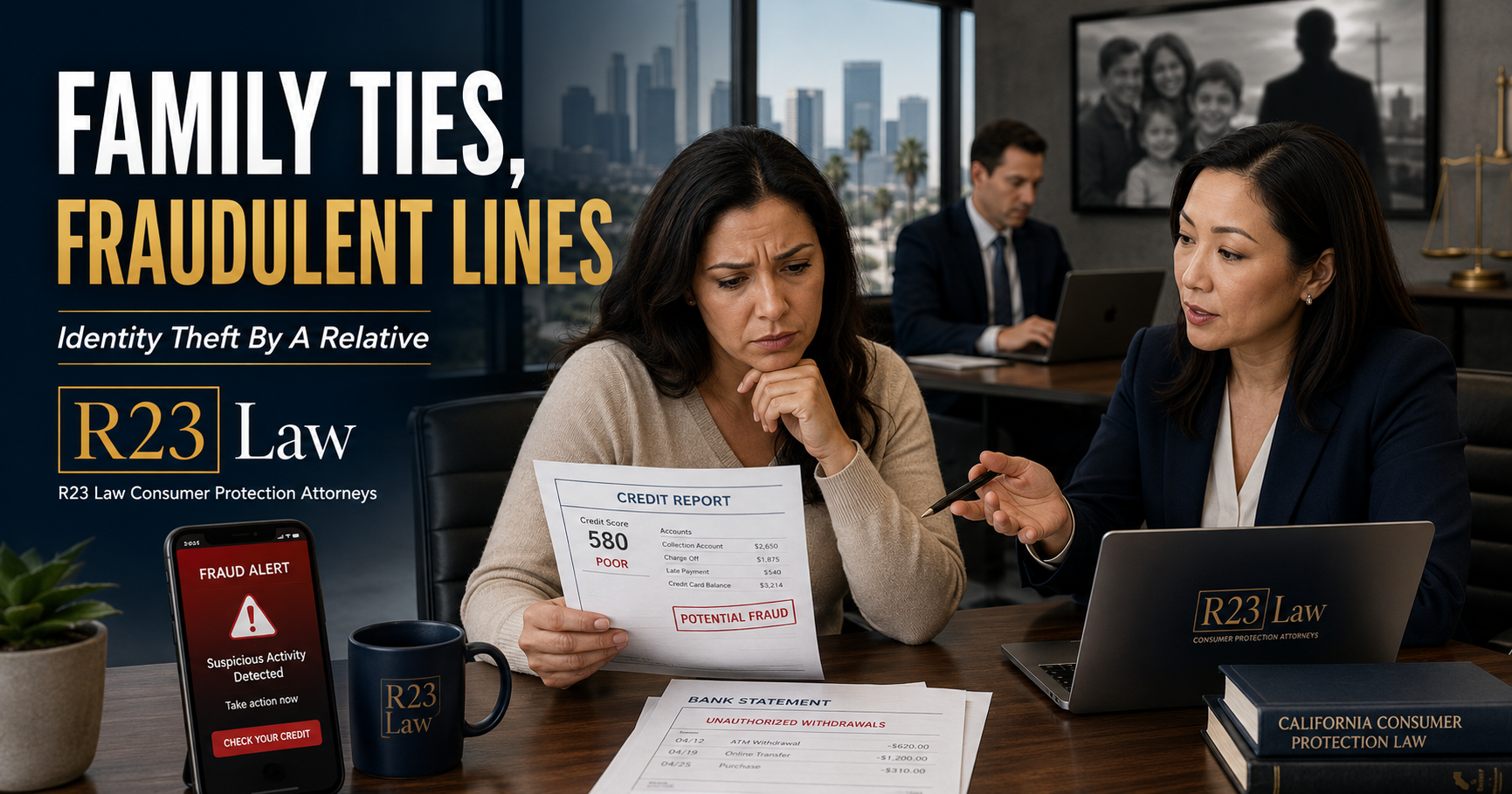
Identity theft is devastating no matter who commits it
When the person responsible is a spouse, parent, sibling, child, or another trusted relative, the financial damage is often compounded by emotional distress and a profound breach of trust.
Identity theft committed by someone the victim knows is sometimes called familiar fraud or family identity theft. It may involve unauthorized credit card charges, fraudulent loans, utility accounts, cell phone plans, or other accounts opened with a victim’s personal information.
Family loyalty does not make identity theft lawful. Using another person’s Social Security number, bank account information, credit card number, or other identifying information without permission may constitute identity theft—even when the person responsible is a relative.
Family Fraud Is Still Identity Theft
Identity theft generally occurs when someone uses another person’s sensitive information without authorization for financial or personal gain.
Because relatives often have access to mail, tax documents, wallets, electronic devices, passwords, and financial records, family identity theft may remain undetected for months or even years. The victim may not discover the fraud until a credit application is denied, a collection notice arrives, or an unfamiliar account appears on a credit report.
Common examples include:
A spouse or former spouse opening a credit account using the other spouse’s name and Social Security number.
A parent using a child’s identity to establish utilities, obtain a cell phone plan, or apply for credit.
A child using a parent’s credit card information or personal identification number to make unauthorized purchases.
A sibling using another sibling’s identification or personal information for purchases, loans, or other transactions.
A relative intercepting mail or accessing an electronic account to obtain financial information.
The fact that the offender is a family member does not erase the victim’s financial losses or legal rights.
R23 Law’s Expert Legal Services For Consumers Injured By Family Identity Theft
Family identity theft cases require more than a standard credit dispute. The victim may be dealing with multiple fraudulent accounts, collectors demanding payment, inaccurate credit reporting, and continuing access to private information.
R23 Law’s experienced legal team can evaluate the full scope of the identity theft, identify the companies reporting or attempting to collect fraudulent debts, and determine which consumer protection laws may apply.
A thorough legal review may include:
Examining credit reports, account statements, collection letters, and application records.
Identifying fraudulent accounts and unauthorized transactions.
Evaluating prior disputes submitted to credit bureaus, creditors, or debt collectors.
Preserving communications and documents that establish financial and emotional harm.
Determining whether reporting agencies, creditors, furnishers, or collectors failed to meet their legal obligations.
Early action can be particularly important when the relative still has access to the victim’s mail, accounts, devices, or identifying information.
Protecting Personal Information From Familiar Fraud
Family identity theft can occur inside the home, during visits, while someone is traveling, or after a relationship has ended. Consumers can reduce exposure by controlling access to sensitive records and regularly reviewing their financial activity.
Protective measures include:
Keeping Social Security cards, tax returns, credit card statements, bank records, and other private documents in a locked location.
Storing wallets and purses where guests or household members cannot easily access them.
Shredding financial documents before disposal.
Using unique passwords for financial, email, and credit-monitoring accounts.
Logging out of shared computers and electronic devices.
Monitoring bank and credit card statements for unfamiliar activity.
Reviewing credit reports for accounts, balances, addresses, or inquiries that are not recognized.
Redirecting mail to a secure address or post office box when personal mail may be intercepted.
Taking additional precautions when traveling or leaving another person in charge of the home.
These precautions cannot eliminate every risk, but they may prevent continued misuse and make suspicious activity easier to identify.
Immediate Action After Discovering Family Identity Theft
A victim may face pressure from relatives to remain silent, avoid law enforcement, or treat the matter as a private family dispute. That pressure should not prevent the victim from protecting credit, finances, and personal safety.
The following steps may be appropriate after discovering identity theft by a relative.
Secure Financial And Online Accounts
Contact banks, credit card companies, and other financial institutions connected to unauthorized transactions. Change account passwords, personal identification numbers, security questions, and email credentials.
Consider replacing compromised cards or account numbers when continued unauthorized access is possible.
Place Fraud Alerts Or Credit Freezes
A fraud alert notifies potential creditors that the consumer may be an identity theft victim and that additional verification should occur before new credit is issued.
A credit freeze restricts access to the consumer’s credit file and may prevent new accounts from being opened. Freezes generally must be placed separately with each major credit reporting agency.
Review All Credit Reports
Examine reports from Equifax, Experian, and TransUnion. Look for unfamiliar accounts, incorrect balances, collection entries, addresses, names, or credit inquiries.
Fraud may appear differently across the three reports, so reviewing only one report may leave additional accounts undiscovered.
Dispute Fraudulent Information
Consumers generally have the right to dispute fraudulent accounts and inaccurate information appearing on their credit reports. Disputes should clearly identify the contested information and include relevant supporting documents.
Keep copies of every dispute, enclosure, response, tracking number, and delivery confirmation. Written records may become important when a credit bureau, creditor, or collector fails to correct the problem.
File An Identity Theft Report
Victims may report identity theft to law enforcement and through the Federal Trade Commission’s IdentityTheft.gov reporting system. A police report or FTC identity theft report may provide important documentation when challenging fraudulent accounts.
Reporting a relative can be emotionally difficult. Nevertheless, formal documentation may be necessary to establish that the accounts were unauthorized.
Preserve Evidence Of Financial Harm
Save collection letters, denial notices, increased interest-rate offers, loan records, housing denials, employment communications, and other documents showing the consequences of the identity theft.
Victims should also retain records of time spent addressing the fraud, out-of-pocket expenses, lost opportunities, and significant emotional distress.
R23 Law’s California Consumer Protection Attorneys Pursue Credit Corrections And Accountability
Submitting a dispute does not always resolve the damage. Credit bureaus may verify fraudulent accounts without conducting a meaningful investigation. Creditors may continue furnishing inaccurate information. Debt collectors may continue demanding payment for obligations the victim never authorized.
R23 Law’s California Consumer Protection Attorneys represent consumers facing unresolved identity theft and credit reporting violations. Depending on the circumstances, the firm’s legal services may include:
Preparing and evaluating disputes concerning fraudulent accounts.
Communicating with credit reporting agencies, creditors, furnishers, and debt collectors.
Challenging inaccurate or incomplete credit reporting.
Seeking the removal or blocking of identity-theft-related information.
Investigating whether companies ignored supporting documents or failed to conduct reasonable investigations.
Pursuing claims for financial losses, emotional distress, reputational harm, or other recoverable damages.
Seeking court orders or other remedies designed to prevent continued misuse of personal information.
The available claims and remedies depend on the facts, the parties involved, and the laws governing the disputed conduct.
Consumer Rights Under Federal And California Law
Several consumer protection laws may apply after identity theft by a family member.
The Fair Credit Reporting Act
The Fair Credit Reporting Act, commonly known as the FCRA, regulates the collection, investigation, and reporting of consumer credit information.
The FCRA gives consumers the right to dispute inaccurate or fraudulent information. Credit reporting agencies and companies furnishing account information may have duties to investigate disputes and correct information that cannot be verified as accurate.
When a company fails to comply with those obligations, an identity theft victim may have legal claims under the FCRA.
The Fair Debt Collection Practices Act
The Fair Debt Collection Practices Act, or FDCPA, regulates the conduct of qualifying third-party debt collectors.
A collector pursuing a debt created through identity theft may not use prohibited harassment, deception, threats, or misrepresentations. Collection activity involving a fraudulent account should be documented carefully, particularly after the consumer has notified the collector that the debt resulted from identity theft.
California Identity Theft Protections
California law also provides protections for identity theft victims. Depending on the circumstances, state law may provide procedures for challenging identity-theft-related debts, correcting records, seeking injunctive relief, or pursuing damages against responsible parties.
Because domestic and family identity theft may overlap with financial abuse, coercive control, elder abuse, or the misuse of joint accounts, a complete legal analysis should consider more than the fraudulent account itself.
R23 Law’s Legal Strategy For Financially Injured Consumers
Family identity theft cases frequently involve several responsible parties. The relative may have initiated the fraud, while a creditor, credit bureau, account furnisher, or debt collector may have magnified the damage by continuing to report or collect the fraudulent debt.
R23 Law’s legal strategy focuses on both the original identity theft and the conduct of the companies handling the resulting accounts.
That may involve determining:
Who opened or used the account.
Which company approved the fraudulent application.
Which businesses reported the account to the credit bureaus.
Whether disputes were properly investigated.
Whether collection continued after notice of identity theft.
Whether inaccurate information caused credit, housing, employment, or financial injury.
Which federal and California consumer protection claims may be available.
This broader approach is designed to address the full chain of misconduct rather than treating each fraudulent account as an isolated clerical error.
Family Pressure Should Not Override Consumer Rights
Victims often hesitate to report family identity theft because they fear conflict, retaliation, embarrassment, or permanent damage to the relationship. Other relatives may minimize the conduct or encourage the victim to absorb the financial loss.
Ignoring the fraud can allow the damage to grow. Unpaid fraudulent accounts may lead to collection activity, lawsuits, damaged credit, higher borrowing costs, and denied opportunities.
Protecting financial records and disputing fraudulent debts is not an act of disloyalty. It is a necessary response to unauthorized conduct that may affect the victim for years.
Contact R23 Law’s California Consumer Protection Attorneys
Family identity theft can damage far more than a credit score. It may disrupt access to housing, employment, transportation, banking, and financial independence.
R23 Law’s California Consumer Protection Attorneys represent consumers facing identity theft, inaccurate credit reporting, and unlawful debt collection. Our attorneys can review the circumstances, evaluate potential violations, and pursue available remedies against companies that fail to respect consumer rights.
Contact R23 Law today for a free consultation.
This article is provided for general informational purposes and does not constitute legal advice.
Drafted from the family identity theft source material and tailored to the structure, tone, and consumer-protection focus reflected in R23 Law’s article archive.
