
FELONY MIX-UP — When Tenant Screening Turns a Common Name Into a Crime
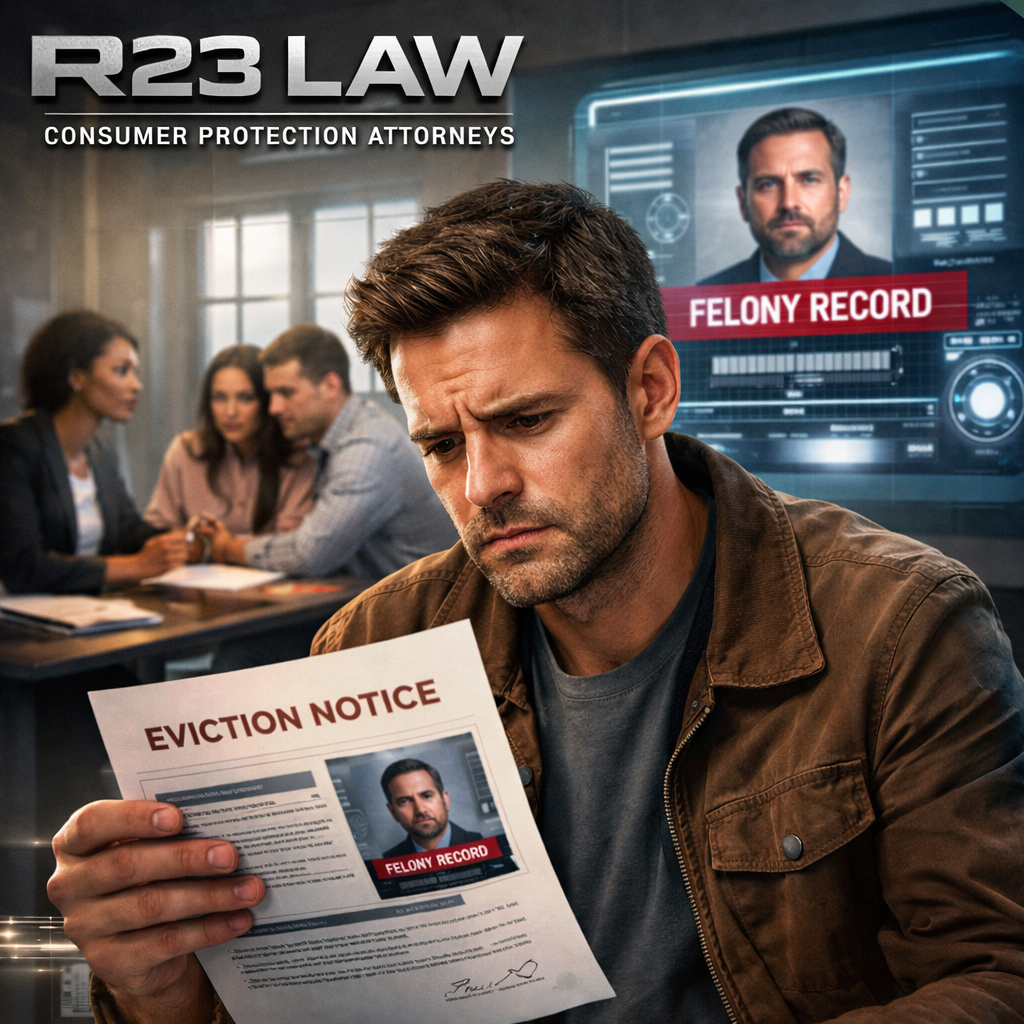
A tenant screening report can wrongly brand you a violent felon
Learn your rights under the FCRA and California laws from R23 Law’s California Consumer Protection Attorneys
Moving for work is already a lot—new city, new lease, new timeline. Now imagine a rental application derailed because a background check claims you’re a violent felon… and you’ve never been arrested, charged, or convicted of anything.
That’s not a “small glitch.” It’s a reputation bomb.
In the attached story, a tenant screening report attributed a violent felony conviction to the wrong person. The mismatch wasn’t subtle: the actual offender had a middle name; the consumer did not. The alleged crime occurred in a state where the consumer had never lived. Still, the background check company pushed the “match” through anyway, and the consumer was denied housing before the error was finally corrected—after repeated disputes.
This is exactly why tenant screening background check errors belong in the consumer protection lane. And it’s why R23 Law’s California Consumer Protection Attorneys treat these cases like what they are: a preventable industry failure with real, measurable damage.
Tenant Screening Errors Don’t Look Like “Typos”
When a tenant screening company mixes you up with someone else, the fallout moves fast:
Denied housing (often with no meaningful explanation beyond “background check”)
Lost time and money (application fees, holding deposits, moving costs)
Reputation harm (a “violent felony” label can follow you to other applications)
Emotional distress (humiliation, anxiety, fear of applying again)
The consumer in the attached example got the report corrected only after multiple disputes—yet the denial already happened, and the stigma didn’t magically disappear when the record was removed.
The Root Cause: Lazy Matching + Common Names
Tenant screening companies know certain names are common. That’s not news. The real issue is what they do with that knowledge.
In the attached story, the screening company allegedly relied on a simplistic match—essentially reducing identity to a shared first and last name—despite clear data signals (like the middle-name discrepancy) that should have stopped the match.
This isn’t just unfair. It’s the exact scenario consumer reporting laws are designed to prevent.
Federal Protections: The Fair Credit Reporting Act (FCRA)
Tenant screening reports usually fall under the Fair Credit Reporting Act (FCRA), the federal law that regulates consumer reporting agencies and requires reasonable procedures to assure maximum possible accuracy of the information they report.
For renters, the FCRA framework matters in three big ways:
1) Accuracy isn’t optional
If a company reports criminal history, it has a legal duty to use reasonable procedures to avoid pinning someone else’s record on you—especially when identifying details don’t line up.
2) Disputes must trigger a real reinvestigation
When you dispute inaccurate information, the reporting company must conduct a reasonable reinvestigation and correct or delete information that can’t be verified.
3) Damages can be available
Depending on the facts, consumers may pursue compensation for harm caused by negligent or willful noncompliance—think out-of-pocket losses, emotional distress damages, and potentially statutory or punitive damages in certain cases.
R23 Law’s California Consumer Protection Attorneys routinely evaluate these cases for whether the “mistake” is actually an FCRA compliance failure.
California Adds Extra Teeth: ICRAA and Related Protections
California doesn’t stop at federal law. In many tenant screening situations, state laws can add additional consumer rights and additional exposure for companies that cut corners.
One major statute is the Investigative Consumer Reporting Agencies Act (ICRAA), which governs certain background checks and imposes stricter requirements than many consumers realize—especially around disclosures and the way reports are presented and obtained.
When background check companies and end users (like landlords or property managers) don’t follow the rules, those violations can be actionable—sometimes even when the consumer is never shown the report until after the damage is done.
R23 Law’s California Consumer Protection Attorneys look at the full stack: federal FCRA duties plus California-specific requirements that frequently get ignored in the tenant screening world.
Red Flags That Suggest a Strong Consumer Protection Claim
Not every inaccurate report becomes a lawsuit. But certain patterns are common in stronger cases:
Mixed files / mistaken identity (your record blended with someone else’s)
Criminal history tied to the wrong state, wrong dates, or wrong identifiers
A “verified” label slapped on information that clearly doesn’t match you (as described in the attached story)
Multiple disputes required before a correction is made
A denial decision (housing or employment) that occurs before the error is corrected
Repeat reporting of the same inaccurate data after disputes
The attached example checks several of these boxes: mistaken identity, denial of housing, and correction only after repeated disputes.
Action Checklist After a Tenant Screening Background Check Mix-Up
If a tenant screening report wrongly tags you with a criminal record, speed and documentation matter. Here’s a practical checklist that preserves leverage:
Get the full report (not a summary)
Request the complete tenant screening file and keep a copy of everything you receive.
Document the denial
Save emails, portal screenshots, adverse action notices, and any messages about the denial or “failed screening.”
Dispute in writing and keep proof
Send a written dispute with supporting documents (ID, proof of address history, court records if relevant). Keep delivery confirmation and copies.
Flag identity theft indicators
If the report suggests fraud (accounts, addresses, aliases you don’t recognize), consider steps like fraud alerts and identity documentation—depending on your situation.
Track repeat errors
If the same false record reappears later, that pattern can be powerful evidence of broken procedures.
When the stakes include housing—and a false violent felony label—this isn’t “wait and see” territory. It’s “build the record” territory.
Where R23 Law’s California Consumer Protection Attorneys Fit In
Tenant screening companies don’t just sell data—they sell decisions. And when their process is sloppy, consumers pay the price first.
R23 Law’s California Consumer Protection Attorneys focus on cases involving:
Background check errors and mixed files
Denied housing tied to inaccurate tenant screening reports
FCRA and California investigative reporting violations
Wrongful criminal record reporting
Damages for financial loss and reputational harm
If a background check turned you into the “wrong person,” the legal analysis isn’t limited to “did they fix it eventually.” The real question is whether the company’s procedures and reinvestigation were lawful—and what the denial cost you.
Bottom Line
A tenant screening report that brands someone a violent felon—based on a flimsy name match—doesn’t just derail housing. It can derail stability. The attached story shows how quickly an inaccurate report can snowball, and how long the impact can last even after a correction.
For Californians facing tenant screening background check errors, R23 Law’s California Consumer Protection Attorneys bring the consumer protection lens these cases demand: accuracy, accountability, and compensation when the law is violated.
Disclaimer: This article is for general informational purposes and is not legal advice. Every case depends on specific facts.
