
HACKED IDENTITY — When Stolen Data Becomes Financial Fraud
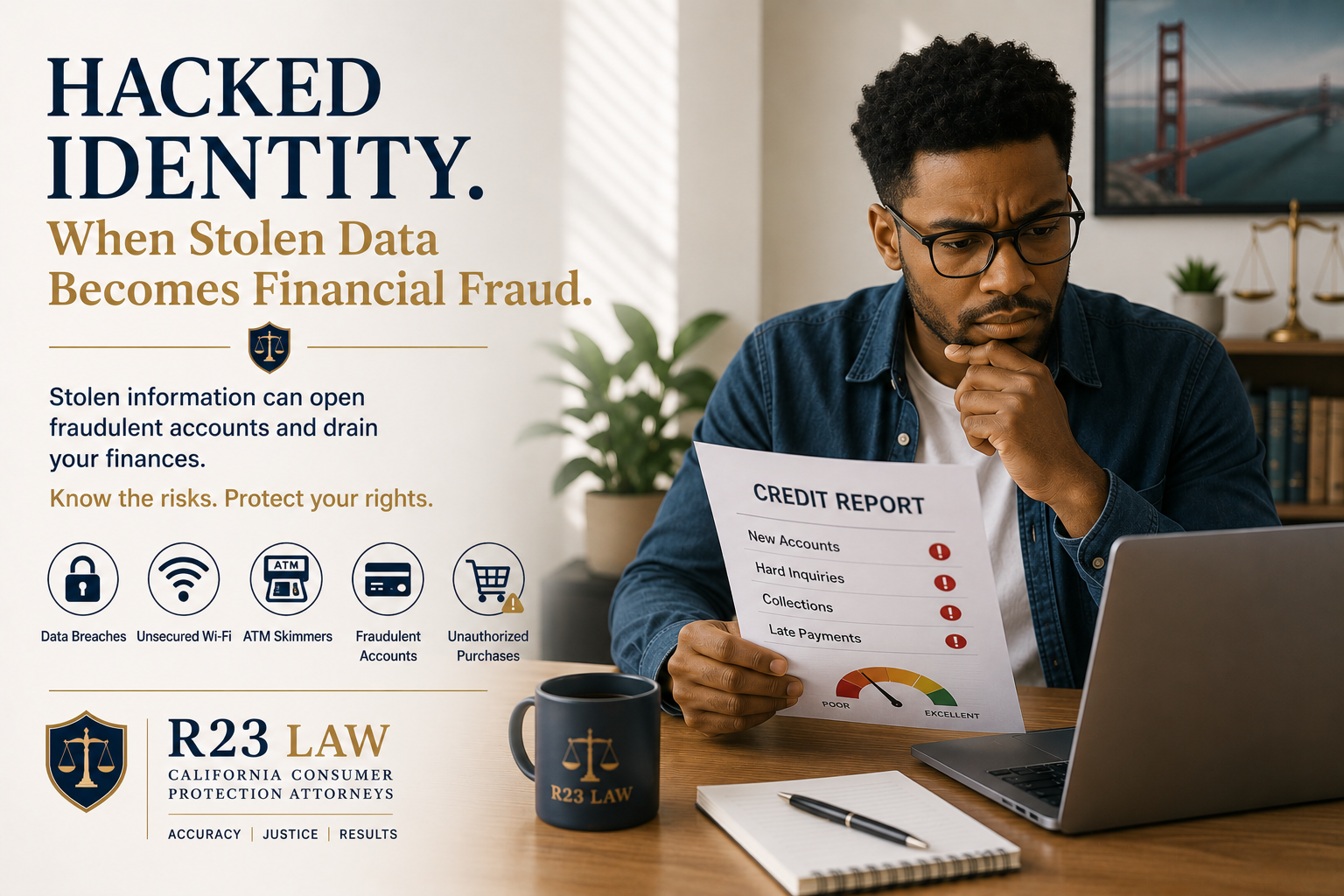
Identity theft has become increasingly sophisticated as more personal and financial information moves online
Criminals no longer need to physically steal a wallet to gain access to sensitive information. A compromised password, exposed Social Security number, unsecured network, or stolen banking credential may be enough to create fraudulent accounts or unauthorized transactions.
The attached source explains that hackers may obtain personal information through data breaches, unsecured Wi-Fi networks, compromised ATMs, and other digital attacks. Once that information is obtained, it may be used to open loans, make unauthorized purchases, access financial accounts, or commit other forms of fraud in the victim's name.
R23 Law's California Consumer Protection Attorneys represent consumers dealing with identity theft, fraudulent credit accounts, unauthorized financial transactions, inaccurate credit reporting, and related consumer protection violations throughout California.
Identity Theft Turns Personal Information Into a Fraud Tool
Identity theft occurs when another person uses someone else's identifying information without authorization for an improper purpose.
The source identifies financial fraud as one of the most common uses of stolen personal information. A criminal may use another person's credentials to obtain loans, make unauthorized purchases, or otherwise conduct transactions while pretending to be the victim.
Identity theft may involve information such as:
Names
Email addresses
Passwords
Birth dates
Social Security numbers
Credit card information
Bank account credentials
PIN numbers
Other sensitive identifying information
Once stolen, that information may be used directly by the hacker or transferred to another person who uses it to commit fraud.
Data Breaches Can Expose Large Amounts of Personal Information
One of the methods highlighted in the source is a data breach.
A data breach occurs when an unauthorized person gains access to information held by a business, organization, or other system.
The exposed information may include:
Email addresses
Passwords
Dates of birth
Social Security numbers
Account information
Other personal data
The criminal who obtains the information may use it personally or sell it to other fraudsters.
That means the consequences of a breach may not become visible immediately. A consumer's information can potentially remain in criminal circulation before being used to open an account or conduct an unauthorized transaction.
Stolen Credentials Can Lead to Fraudulent Accounts
Once criminals obtain enough identifying information, they may attempt to create financial obligations in the victim's name.
That can include:
Credit cards
Personal loans
Financing accounts
Other forms of credit
The consumer may not discover the account until it appears on a credit report, a bill arrives, a collection agency begins making contact, or an application for legitimate credit is unexpectedly denied.
An account opened through identity theft can create additional problems if the fraudster fails to make payments and the resulting delinquency is reported as though it belongs to the victim.
Unsecured Wi-Fi Can Create Another Opportunity for Identity Theft
The source also identifies unsecured Wi-Fi networks as a potential avenue for hackers seeking personal information.
When a consumer connects a phone or other device to an inadequately secured network, sensitive information stored or transmitted through that device may become vulnerable.
The source specifically notes risks involving:
Banking information
Passwords
Other sensitive personal information
Public Wi-Fi is an obvious concern, but the source also cautions that poorly secured home networks can create vulnerabilities.
Consumers should be cautious when accessing sensitive financial accounts over networks they do not trust.
ATM Skimmers Can Capture Card and PIN Information
Identity theft does not occur exclusively through websites and online accounts.
The source describes compromised ATMs as another potential source of stolen financial data.
Criminals may use devices known as skimmers to capture card information when a consumer inserts a debit or credit card into an ATM.
Other techniques may be used to obtain PIN information.
Once criminals obtain both the card details and identifying information needed to access the account, unauthorized withdrawals or other transactions may follow.
Consumers should review financial statements regularly for unfamiliar activity, particularly after using an ATM or payment terminal that appeared unusual.
Identity Theft Can Produce Unauthorized Purchases
Some consumers first discover identity theft through a transaction they never made.
An unauthorized purchase may appear on:
Credit card statements
Debit card statements
Bank accounts
Online payment accounts
One unexpected charge may indicate that payment credentials have been compromised.
It is important to preserve the statement showing the transaction and any related account alerts or communications.
Identity theft involving existing accounts can be different from fraud involving entirely new accounts, but both may create financial losses and consumer reporting problems.
Identity Theft Can Also Create Loans in the Victim's Name
The source specifically identifies fraudulent loans as another consequence of stolen identity information.
A consumer may discover:
A loan they never applied for
A hard credit inquiry they do not recognize
A new account on a credit report
Collection activity involving unfamiliar debt
A delinquent loan appearing in their credit history
When that happens, the underlying problem may extend beyond the lender.
The fraudulent information can also affect credit reports and potentially create repeated problems whenever another company reviews the victim's credit history.
A Credit Freeze Can Restrict New Fraudulent Accounts
The source recommends placing a credit freeze after personal information has been compromised.
A credit freeze can restrict access to a consumer's credit file and make it more difficult for a fraudster to open additional credit accounts using stolen information.
For identity theft victims, this can be an important protective measure after discovering that personal information has already been exposed.
Consumers should also continue reviewing existing financial accounts because a freeze does not address unauthorized activity on accounts that are already open.
Credit Reports Should Be Reviewed After Identity Theft
Identity theft can leave evidence on a credit report.
Consumers should review their credit reports for unfamiliar:
Credit cards
Loans
Collection accounts
Hard inquiries
Balances
Delinquencies
Addresses
Other account information
An unfamiliar account may indicate that someone successfully opened credit using stolen information.
An unfamiliar inquiry may indicate that someone attempted to apply for credit even if the account was never approved.
Preserving copies of the credit reports showing suspicious information can create an important record of the fraud.
Fraudulent Credit Information Should Be Disputed
The source states that consumers may dispute inaccurate information appearing on their credit reports after identity theft.
A dispute should clearly identify the information that resulted from fraud.
Consumers should consider preserving:
Copies of the credit report
Fraudulent account information
Bank or card statements
Written disputes
Identity theft documentation
Supporting records
Responses from creditors
Responses from credit reporting agencies
Delivery confirmation for mailed disputes
Documentation matters because identity theft victims are often required to establish that an account, transaction, or debt does not belong to them.
Fraud Can Continue Even After Personal Information Is Compromised
Discovering that personal information was exposed does not necessarily mean the resulting fraud is over.
A criminal may already possess the information needed to attempt future transactions.
That makes ongoing monitoring particularly important.
Consumers should watch for:
New financial accounts
Unexpected password reset notices
Unfamiliar credit inquiries
Unauthorized transactions
Collection letters
Changes to account credentials
Credit score changes connected to unfamiliar activity
A pattern of suspicious activity can indicate that stolen personal information is still being used.
Preserve Evidence of the Identity Theft
Identity theft disputes can involve multiple institutions, including banks, lenders, credit card issuers, credit reporting agencies, and debt collectors.
Preserving evidence from the beginning can make it easier to reconstruct what happened.
Useful records may include:
Credit reports
Financial statements
Fraud alerts
Account notifications
Emails
Text messages
Screenshots
Fraudulent applications
Collection notices
Dispute letters
Company responses
Notes from telephone calls
Keep records of dates, reference numbers, and the names of representatives involved in the dispute whenever possible.
Identity Theft Can Cause Compensable Financial Harm
The source recognizes that identity theft can create damages beyond the inconvenience of replacing a card or changing a password.
Fraud may lead to:
Money removed from financial accounts
Fraudulent debts
Credit reporting damage
Collection activity
Lost financial opportunities
Costs associated with addressing the fraud
Depending on the circumstances and applicable law, victims may have legal remedies when companies fail to properly address fraudulent accounts, transactions, or inaccurate reporting.
R23 Law's California Consumer Protection Attorneys Represent Identity Theft Victims Throughout California
Identity theft frequently creates several problems at once.
A compromised identity may result in fraudulent transactions, unauthorized accounts, credit reporting errors, collection demands, and disputes with financial institutions.
R23 Law's California Consumer Protection Attorneys evaluate the complete history of the fraud and the companies involved.
A legal review may examine:
How the identity theft was discovered
Which personal information was compromised
Whether fraudulent accounts were opened
Whether unauthorized financial transactions occurred
Whether inaccurate information appeared on credit reports
Whether the consumer submitted disputes
How financial institutions responded
Whether fraudulent information remained after notice
Whether collection activity followed
What financial losses resulted from the identity theft
Learn more about R23 Law's consumer protection practice through About Us and the attorneys behind the firm through Our Team.
Stolen Data Should Not Become a Permanent Financial Record
Hackers may obtain sensitive information in seconds, but the consequences can continue much longer.
A compromised password may become an unauthorized transaction. A stolen Social Security number may become a fraudulent credit account. A data breach may eventually lead to inaccurate credit reporting and collection activity.
Consumers who discover suspicious activity should preserve evidence, secure affected accounts, review credit reports, and dispute fraudulent information promptly.
When identity theft continues creating financial or credit reporting problems, R23 Law's California Consumer Protection Attorneys can evaluate the circumstances and the consumer protection rights that may apply.
Contact R23 Law Today
Identity theft caused by hacking can create unauthorized purchases, fraudulent loans, compromised bank accounts, and lasting credit problems.
R23 Law's California Consumer Protection Attorneys represent consumers throughout California dealing with identity theft, fraudulent accounts, unauthorized transactions, inaccurate credit reporting, and related consumer protection violations.
Connect with R23 Law through Contact Us to discuss the identity theft and the financial consequences that followed.
Toll-Free — 310-598-1588 SoCal — (310) 598-1588 Email — info@R23Law.com Website — www.R23Law.com US Bank Tower, 633 W. 5th Street, 26th Floor, Los Angeles, CA
© 2025 R23 Law. All rights reserved. Trusted consumer credit lawyers in Los Angeles.
