
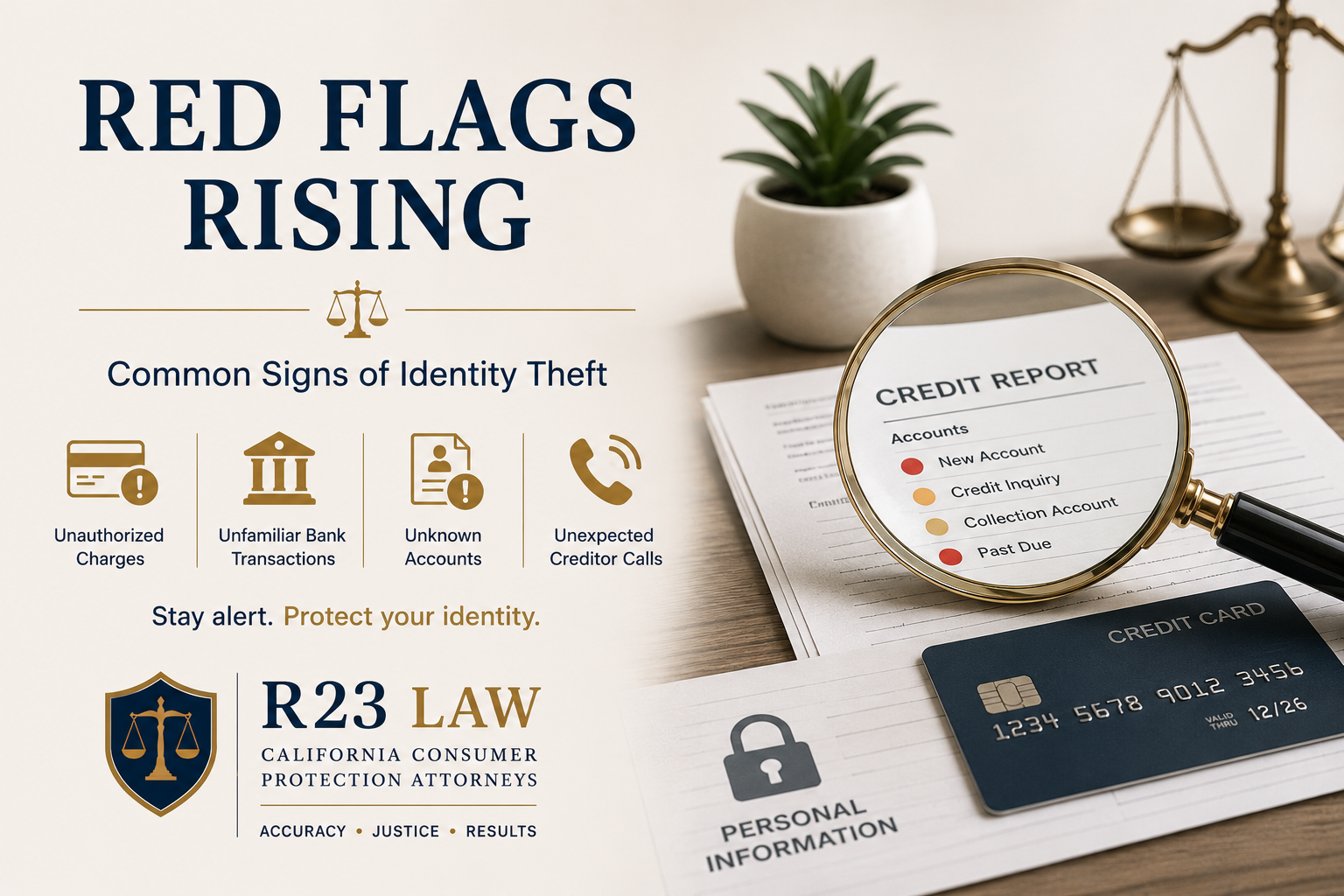
RED FLAGS RISING — Common Signs of Identity Theft
Identity theft does not always become obvious the moment it begins
A consumer may first notice a strange credit card charge, an unfamiliar transaction, a credit account they never opened, or a collection call involving a debt they do not recognize.
These warning signs matter because identity theft can affect both a consumer's finances and the information appearing on a credit report. The attached source focuses on several of the most common indicators of identity theft — unauthorized financial activity, unfamiliar credit accounts, and unexpected communications from creditors or companies about accounts the consumer never opened.
Recognizing suspicious activity early can give consumers an opportunity to secure affected accounts and address fraudulent information before the financial consequences continue growing.
R23 Law's California Consumer Protection Attorneys represent consumers dealing with identity theft, fraudulent accounts, inaccurate credit reporting, unauthorized financial activity, and related consumer protection disputes throughout California.
Unauthorized Credit Card Charges Can Signal Identity Theft
One of the clearest warning signs identified in the source is an unauthorized charge appearing on a credit card statement.
A transaction you do not recognize may indicate that someone gained access to sensitive financial information and is using it to make purchases.
Consumers should regularly review credit card statements rather than assuming every transaction is legitimate.
Pay particular attention to:
Purchases you do not recognize
Transactions from unfamiliar merchants
Charges you know you did not authorize
Other activity inconsistent with your normal account use
A suspicious transaction should not automatically be dismissed simply because the amount appears small.
The important issue is whether the transaction belongs to you.
Unfamiliar Bank Transactions Deserve Immediate Attention
The source also identifies unauthorized bank account transactions as a common sign of identity theft.
When someone obtains access to financial information, the fraud may appear directly in an account before the victim notices any problem elsewhere.
Consumers should review bank statements frequently and compare account activity with transactions they actually made.
When an unfamiliar transaction appears, the source recommends contacting the financial institution immediately and requesting that the affected accounts be frozen to prevent additional damage.
Preserve copies of the statement showing the questionable transaction and any communications with the financial institution.
Credit Reports Can Reveal Fraudulent Accounts
Identity theft does not always involve an account the consumer already owns.
A fraudster may create an entirely new account using the victim's information.
That is why the source emphasizes regularly reviewing credit reports. Credit reports contain information relating to accounts, loans, and payment activity and can expose financial relationships the consumer never created.
Consumers should look carefully for:
Accounts they never opened
Loans they never obtained
Unfamiliar financial companies
Payment activity connected to unknown accounts
Other information that does not match their actual financial history
An unfamiliar account may be an identity theft warning sign.
The source also recognizes that an unfamiliar entry could potentially result from a data-entry error, but consumers should still investigate the information and take steps to secure their accounts.
An Unknown Account Should Not Be Ignored as a Simple Mistake
There can be more than one explanation for inaccurate information on a credit report.
An unfamiliar account might result from an administrative or reporting mistake.
It might also indicate that someone used the consumer's identity.
The distinction is important, but either circumstance deserves attention.
If an account does not belong to you, preserve the report showing the entry and begin documenting the problem.
A credit report can change later, so keeping the version that originally revealed the suspicious information can provide an important record.
Credit Report Monitoring Can Reveal Fraud Before It Spreads
The source emphasizes that reviewing credit reports regularly can allow consumers to detect identity theft more quickly.
A consumer who rarely checks their report may not discover fraudulent activity until:
A creditor begins making contact
An account becomes delinquent
The debt reaches collections
The consumer experiences another financial consequence
Regular review gives consumers an opportunity to identify unfamiliar information earlier in that progression.
Credit monitoring is therefore not simply about watching a score. It is also about making sure the financial history associated with your identity actually belongs to you.
Unexpected Creditor Calls Can Be a Major Warning Sign
A call from a creditor about an account you never opened should immediately attract attention.
The source identifies unexpected calls and texts from creditors as another common indicator that a consumer's identity may have been compromised.
A caller may reference:
An unfamiliar account
A balance you do not recognize
Missed payments
An obligation you never created
Do not assume the company simply has the wrong telephone number.
Document the communication and determine what account the company is attempting to discuss.
Emails About Unknown Accounts Can Reveal Identity Misuse
Unexpected email can provide another clue.
The source notes that communications from companies regarding accounts the consumer never opened may indicate identity theft.
A consumer might receive:
Account notices
Payment reminders
Messages about balances
Other correspondence connected to an unfamiliar financial account
Preserve these messages rather than immediately deleting them.
They may establish the existence of a fraudulent account and show when the consumer first became aware of it.
Collection Calls May Mean the Fraud Started Months Earlier
One of the most important points in the source concerns debt collection.
When a consumer first learns about an unfamiliar account through a collection call, the identity theft may have occurred well before the communication arrived.
The source explains that if creditors are already making collection-related contact, the fraudulent debt may have progressed to collections, suggesting that the identity theft likely occurred months earlier.
This is why collection communications concerning unfamiliar debts deserve immediate attention.
By that stage, the fraudulent account may already have accumulated a history involving unpaid balances or other negative information.
Fraudulent Accounts Can Affect a Consumer's Credit
The source connects identity theft directly to credit reporting and a consumer's credit score.
When fraudulent charges or accounts become associated with a consumer, the information may begin affecting the financial record used to calculate creditworthiness.
That makes it important to address both sides of the problem:
The underlying identity theft
The resulting credit information
Simply recognizing that fraud occurred may not automatically correct information already associated with the consumer.
Financial Statements Should Be Reviewed Regularly
The source places particular emphasis on frequent financial review.
Consumers should make a habit of reviewing:
Credit card statements
Bank transactions
Credit reports
Communications from creditors
Communications relating to unfamiliar accounts
Identity theft warning signs can appear in different places.
A fraudulent transaction may show up in a bank account before anything appears on a credit report.
A new account may appear on a credit report before a bill or collection notice reaches the consumer.
Looking across several types of financial records can make patterns easier to recognize.
Preserve Evidence of Suspicious Activity
When signs of identity theft appear, preserving the evidence can be important.
Keep copies of:
Credit card statements
Bank statements
Credit reports
Creditor emails
Creditor text messages
Collection communications
Records identifying unfamiliar accounts
Correspondence with financial institutions
A timeline can also be useful.
Record when the suspicious activity first appeared, when you contacted the company, and what response you received.
If the identity theft later produces credit reporting or collection problems, these records can show how the issue developed.
Secure Financial Accounts After Suspicious Activity Appears
The source recommends immediate action when unauthorized financial transactions are identified.
Contact the financial institution associated with the suspicious activity and explain that you do not recognize the transaction.
The source specifically recommends requesting an account freeze to prevent additional damage when unauthorized activity is discovered.
Consumers should also continue checking other accounts and credit information for signs that the problem extends beyond the first transaction discovered.
Identity theft may involve more than one account.
Fraudulent Credit Information Should Be Addressed
When identity theft produces an account that appears on a credit report, the inaccurate information should not simply be left there.
The source advises consumers to take steps to secure their accounts and seek removal of information that does not belong to them.
Preserve:
The credit report showing the account
Any documents connected to the fraudulent account
Communications about the account
Later reports showing whether the information changed
That record becomes especially important when inaccurate information continues despite the consumer's efforts to correct it.
R23 Law's California Consumer Protection Attorneys Represent Identity Theft Victims Throughout California
Identity theft can begin with one unauthorized transaction and develop into fraudulent accounts, inaccurate credit reporting, collection activity, and continuing financial problems.
R23 Law's California Consumer Protection Attorneys evaluate identity theft matters involving suspicious account activity and the financial consequences that follow.
A legal evaluation may involve:
Unauthorized credit card charges
Unauthorized bank transactions
Accounts the consumer never opened
Identity theft-related credit reporting
Creditor communications
Collection activity involving fraudulent debt
Continuing inaccurate financial information
Financial consequences associated with the fraud
R23 Law's consumer protection practice focuses on protecting consumers when fraudulent activity becomes associated with their legitimate financial records.
Learn more about the attorneys behind the firm through Our Team and R23 Law's consumer protection practice through About Us.
R23 Law's Identity Theft Legal Services Throughout California
Identity theft can require consumers to deal with financial institutions, creditors, collection companies, and credit reporting problems at the same time.
R23 Law's California Consumer Protection Attorneys review the underlying fraud, the accounts involved, and the resulting consumer reporting or collection issues to determine what legal options may be available.
When suspicious activity has already progressed into unfamiliar debt or inaccurate credit information, preserving the full record can be especially important.
Consumers can connect directly with the firm through Contact Us.
Small Warning Signs Can Reveal a Larger Identity Theft Problem
An unfamiliar transaction, unknown account, unexpected creditor email, or collection call may appear isolated at first.
Sometimes it is.
Other times, it is the first visible sign that someone has been using the consumer's identity for months.
Recognizing these warning signs and responding promptly can limit the opportunity for fraudulent activity to continue.
When identity theft creates persistent financial or credit reporting consequences, R23 Law's California Consumer Protection Attorneys can evaluate the circumstances and the consumer protection issues involved.
Contact R23 Law Today
Unauthorized charges, unfamiliar bank transactions, unknown credit accounts, and collection communications can all signal that a consumer's identity has been compromised.
R23 Law's California Consumer Protection Attorneys represent identity theft victims throughout California dealing with fraudulent financial activity, inaccurate credit reporting, unfamiliar debts, and related consumer protection disputes.
Toll-Free — 310-598-1588 SoCal — (310) 598-1588 Email — info@R23Law.com Website — www.R23Law.com US Bank Tower, 633 W. 5th Street, 26th Floor, Los Angeles, CA
© 2025 R23 Law. All rights reserved. Trusted consumer credit lawyers in Los Angeles.
