
IDENTITY THEFT LEAVES TRACKS – Warning Signs, Credit Report Damage, And Consumer Protection Claims In California
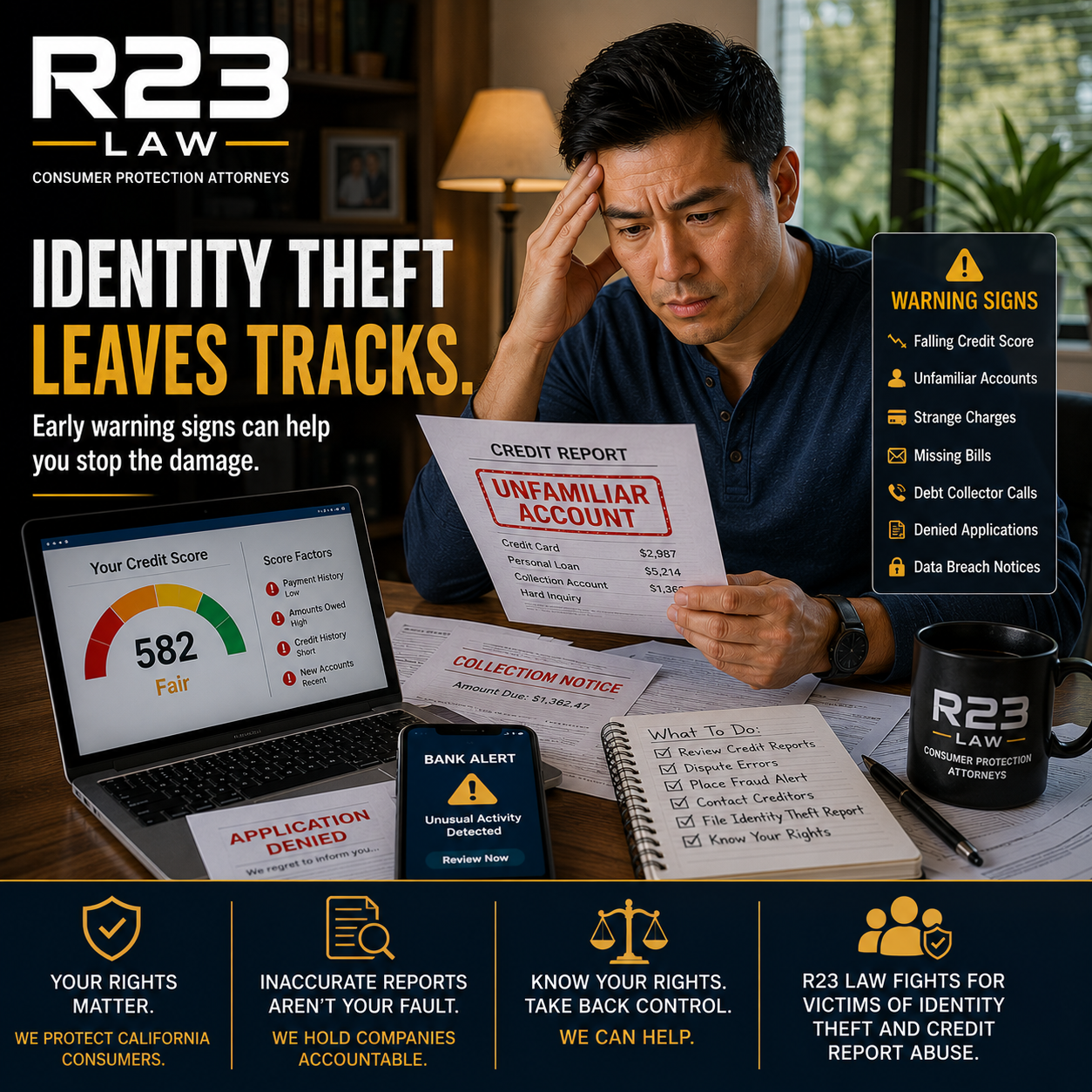
Early identity theft warning signs can include falling credit scores, unfamiliar accounts, missing bills, debt collection calls, and denied applications
R23 Law's California Consumer Protection Attorneys represent California consumers facing identity theft, credit report errors, and unlawful debt collection.
Identity Theft Leaves Tracks
Identity theft can feel invisible at first. A missed statement. A strange charge. A sudden credit score drop. A debt collector asking about an account that never belonged to you. Those details may look small in isolation, but together they can reveal a much larger problem.
The attached source material identifies several early warning signs of identity theft, including data breach notices, unexplained bank withdrawals, unfamiliar credit card charges, missing statements, collection calls about unknown debts, denied credit, unfamiliar accounts, tax filing issues, Social Security earnings discrepancies, rental denials, employment background check concerns, and unexplained insurance increases.
R23 Law's California Consumer Protection Attorneys represent consumers throughout California when identity theft causes false credit reporting, fraudulent accounts, collection pressure, and denied financial opportunities. Learn more about the firm at AboutUs, meet Our Team, or begin a confidential review through ContactUs.
Early Warning Signs of Identity Theft
Identity thieves often leave financial footprints. Consumers should pay close attention to unfamiliar activity on credit reports, sudden drops in credit scores, unexpected bills, and alerts from banks or credit card companies.
A data breach notice should also be taken seriously. Even when no fraudulent account has appeared yet, exposed personal information can later be used to open accounts, access financial records, or create synthetic identities. The FTC explains that credit freezes and fraud alerts can reduce the risk of continued identity misuse, though they operate in different ways.
Credit Score Drops Without a Clear Reason
A falling credit score can be one of the first visible signs that something is wrong. If there were no missed payments, new loans, large balances, or recent credit applications, a sudden score change may point to fraudulent activity.
R23 Law's California Consumer Protection Attorneys review credit reports, tradelines, inquiries, creditor records, dispute responses, and denial letters to identify whether identity theft damaged a consumer’s credit profile.
Strange Bank Withdrawals and Card Charges
Unexplained bank withdrawals or credit card charges may signal that a thief has gained access to account credentials, card numbers, or online banking information. Even small charges matter. Fraudsters may test an account with minor purchases before attempting larger transactions.
Consumers should preserve statements, screenshots, fraud alerts, written disputes, and any response from the bank or card issuer. Those records may later show whether the financial institution conducted a lawful and reasonable investigation.
Missing Bills and Changed Addresses
Identity thieves sometimes redirect mail to keep victims from seeing fraudulent activity. Missing credit card statements, bank records, utility bills, or collection notices may indicate that an address was changed without authorization.
A missing statement can quickly become a credit injury. Late payments, balances, and collection accounts may appear before a consumer realizes an account was compromised.
Debt Collectors Calling About Unknown Debts
A debt collection call about an unfamiliar account should never be brushed aside. It may mean someone opened credit in the consumer’s name, failed to pay, and allowed the account to move into collections.
R23 Law's California Consumer Protection Attorneys represent consumers facing false debts, collector harassment, inaccurate credit reporting, and collection activity tied to identity theft.
R23 Law's Expert Legal Services for Identity Theft Injury Victims Throughout California
Identity theft can injure consumers financially, emotionally, and reputationally. It can affect credit approvals, housing applications, employment screening, insurance pricing, and access to basic financial products.
R23 Law’s legal services include reviewing identity theft records, analyzing credit reporting violations, challenging false debts, evaluating collector conduct, and pursuing claims when companies refuse to correct documented fraud.
False Accounts on Credit Reports
Unfamiliar accounts on a credit report are a major red flag. A consumer who sees credit cards, loans, addresses, collections, or inquiries they do not recognize should preserve the report and start a written dispute record.
The CFPB states that when a consumer disputes an error with a credit reporting company, the company must investigate the dispute, forward relevant information to the furnisher, and report the results back to the consumer.
FCRA Rights After Identity Theft
The Fair Credit Reporting Act gives identity theft victims important rights. Under 15 U.S.C. section 1681c-2, a consumer reporting agency generally must block information identified as resulting from identity theft within four business days after receiving required materials, including proof of identity, an identity theft report, identification of the fraudulent information, and a statement that the information does not relate to a transaction by the consumer.
When credit bureaus or furnishers ignore identity theft documentation, continue reporting fraudulent accounts, or perform unreasonable investigations, R23 Law's California Consumer Protection Attorneys evaluate potential claims under federal and California consumer protection laws.
Denied Credit, Housing, or Employment After Fraud
Identity theft may first appear through a denial. A lender may deny a loan. A landlord may reject a rental application. An employer may flag a background check. An insurer may raise rates.
Those denials can become key evidence. Consumers should save adverse action notices, background check reports, credit reports, emails, and any explanation provided by the company that made the decision.
Records That Matter in an Identity Theft Case
A strong identity theft record should include credit reports, bank statements, card statements, collection letters, denial notices, police reports, FTC identity theft reports, dispute letters, certified mail receipts, screenshots, call logs, and responses from credit bureaus, creditors, banks, and collectors.
The FTC’s IdentityTheft.gov gives identity theft victims a way to report the theft and obtain recovery steps, including instructions for different types of identity theft.
R23 Law's California Consumer Protection Attorneys for Credit and Collection Damage
Identity theft is often only the first injury. The second injury happens when companies refuse to correct the record.
R23 Law's California Consumer Protection Attorneys pursue accountability when credit bureaus, banks, lenders, debt collectors, background check companies, or other entities continue treating fraudulent information as accurate after receiving notice.
Contact R23 Law Today
When identity theft warning signs turn into false accounts, denied applications, credit report damage, or collection pressure, R23 Law's California Consumer Protection Attorneys can evaluate the records and pursue accountability under consumer protection law.
Toll-Free — 310-598-1588
