
WHEN FINE PRINT CROSSES THE LINE – California Consumer Rights And Legal Action
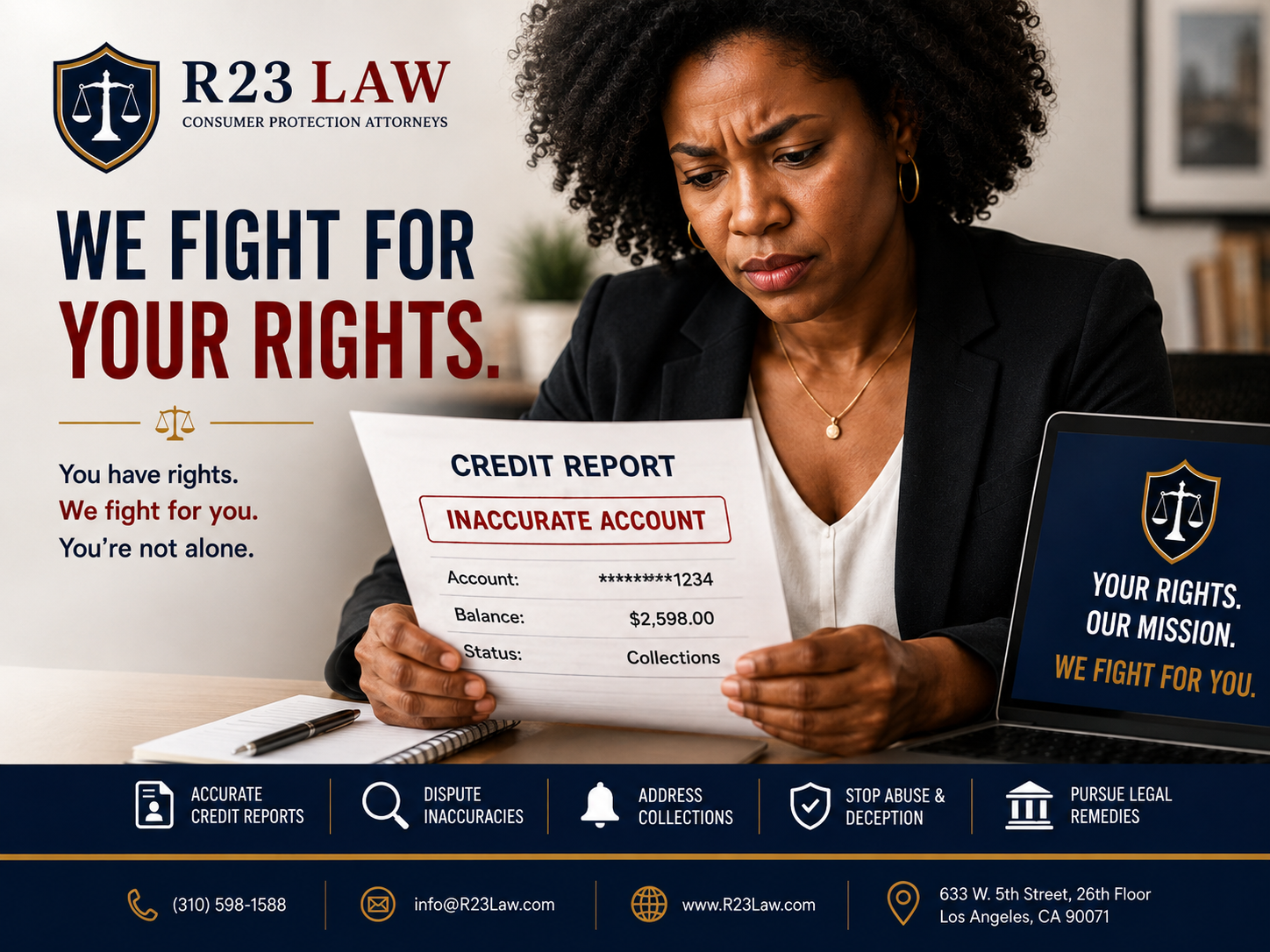
Consumer protection laws govern many of the financial transactions people encounter every day
Credit reports, collection calls, electronic transfers, credit card terms, robocalls, and lending disclosures are all subject to legal requirements designed to protect consumers from unfair, deceptive, and abusive conduct.
Yet many consumers do not realize that a frustrating financial problem may also be a violation of federal or California law.
A credit bureau may continue reporting inaccurate information after a dispute. A debt collector may use threats or relentless calls. An identity thief may create accounts that later appear in collections. A lender may impose terms that were never clearly disclosed.
When these violations cause financial, reputational, or emotional injury, a consumer protection attorney can evaluate the conduct, identify the laws involved, and pursue available remedies.
Consumer Rights Are More Than Fine Print
Consumer protection laws do more than establish technical rules for businesses. They create enforceable rights concerning:
The accuracy and privacy of credit information.
The investigation of disputed credit report errors.
The conduct of debt collectors.
The disclosure of credit and loan terms.
The processing of electronic fund transfers.
The use of automated calls and prerecorded messages.
The operation of credit repair companies.
The handling of identity-theft-related accounts.
The attached source provides a concise overview of several major federal consumer laws and the circumstances in which legal representation may become appropriate.
R23 Law’s Expert Legal Services For Financially Injured Consumers
A consumer may know that something went wrong without knowing which law applies. The same incident can also involve several businesses and multiple consumer protection statutes.
For example, identity theft may lead to:
Fraudulent credit accounts.
Inaccurate credit reporting.
Collection activity involving debts the consumer never authorized.
Denied credit, housing, or employment.
Repeated disputes that do not correct the information.
R23 Law’s California Consumer Protection Attorneys examine the full sequence of events rather than treating each problem as an isolated inconvenience.
That review may include:
Credit reports from Equifax, Experian, and TransUnion.
Written disputes and investigation results.
Collection letters and call records.
Identity theft reports.
Bank and credit card statements.
Loan agreements and account disclosures.
Electronic transfer records.
Robocall logs and text messages.
Credit denial or adverse-action notices.
This evidence can establish which businesses received notice, how they responded, and whether their conduct caused compensable injury.
Fair Credit Reporting Act Protections
The Fair Credit Reporting Act, commonly known as the FCRA, regulates the collection, use, disclosure, and accuracy of information contained in consumer reports.
Credit reports influence decisions involving:
Mortgages and personal loans.
Credit cards.
Interest rates.
Rental housing.
Employment background checks.
Insurance and other financial services.
An inaccurate credit report can therefore affect much more than a credit score.
Access To Credit Information
Consumers have the right to access their credit reports and review the information being published about them.
Regular monitoring may reveal:
Accounts belonging to another person.
Fraudulent accounts.
Incorrect payment histories.
Outdated negative information.
Duplicate collection accounts.
Incorrect balances.
Unfamiliar addresses.
Unauthorized credit inquiries.
Consumers should preserve copies of each report because the information may change after a dispute.
Notice After Adverse Action
A consumer generally must receive notice when information in a consumer report contributes to an adverse decision.
Examples include:
Denial of a loan.
Denial of a rental application.
Rejection for employment.
Less favorable credit terms.
A higher interest rate.
The notice may identify the consumer reporting agency that supplied the report and explain how the consumer can request a copy.
The Right To Dispute Errors
Consumers have the right to dispute inaccurate or incomplete information appearing on their credit reports.
Credit reporting agencies generally must investigate qualifying disputes, often within approximately 30 days, and correct or remove information that is inaccurate or cannot be verified.
A dispute should clearly identify:
The account or entry being challenged.
The specific information that is wrong.
The reason the information is inaccurate.
The correction being requested.
The documents supporting the dispute.
Consumers should keep copies of dispute letters, exhibits, mailing records, online confirmations, and investigation results.
Limits On Outdated Information
The FCRA limits how long many types of negative information may remain on a consumer report. The source notes that many negative entries are generally subject to a seven-year reporting period, while bankruptcies may be reported for a longer period.
The correct reporting period may depend on the type of information and the dates associated with the account.
Privacy And Permissible Access
Credit reports are not public records available to anyone who wants to see them. Access is restricted to parties with a legally recognized purpose.
Employers generally must obtain written authorization before procuring a consumer report for employment purposes.
Unauthorized access, improper disclosure, or failure to follow required procedures may support a consumer claim.
R23 Law’s California Consumer Protection Attorneys Address Credit Reporting Violations
A first dispute does not always resolve a credit reporting problem.
Consumers may receive a response stating that an account was verified even when:
The account belongs to someone else.
The balance is incorrect.
The debt resulted from identity theft.
The payment history is inaccurate.
The information is too old to report.
Supporting documents were ignored.
The furnisher’s records conflict with the credit report.
R23 Law’s California Consumer Protection Attorneys investigate whether credit bureaus and information furnishers fulfilled their duties after receiving notice.
Legal services may include:
Reviewing the consumer’s dispute history.
Comparing reports across the nationwide credit bureaus.
Analyzing investigation results.
Identifying inconsistent reporting.
Examining whether relevant evidence was considered.
Documenting denied credit and unfavorable financial terms.
Pursuing available damages for unlawful reporting practices.
Fair Debt Collection Practices Act Protections
The Fair Debt Collection Practices Act, or FDCPA, regulates qualifying third-party debt collectors and prohibits abusive, deceptive, and unfair collection conduct.
A debt collector cannot treat a consumer however it chooses simply because it claims money is owed.
Restrictions On Collection Calls
The source identifies restrictions on collection calls made before 8:00 a.m. or after 9:00 p.m., based on the consumer’s local time.
Other circumstances may also make contact improper, including repeated communications intended to harass or calls placed at a location the collector knows is inconvenient.
Workplace Contact Restrictions
A collector generally should not continue calling a consumer at work after learning that the employer prohibits such calls.
Consumers should document:
The date the collector was notified.
The person who received the notice.
Calls placed afterward.
Voicemails and messages.
Any workplace consequences.
The Right To Request Debt Information
Consumers may have the right to request information concerning a claimed debt.
Debt validation can be important when:
The consumer does not recognize the account.
The amount appears incorrect.
The debt was previously paid.
The debt resulted from identity theft.
The collector is contacting the wrong person.
The account is too old.
The collector cannot identify the original creditor.
A collector’s failure to provide required information does not necessarily cause the debt to disappear, but it may affect what collection activity can lawfully continue.
Attorney Representation And Communication Limits
When a collector knows that a consumer is represented by an attorney concerning the debt, restrictions may apply to direct communications with the consumer.
The FDCPA also permits consumers to send certain written requests limiting or stopping communications. The legal effect of the request depends on its content and the circumstances.
A communication restriction does not necessarily eliminate the alleged debt or prevent every lawful remedy. It regulates the collector’s communications.
R23 Law’s Expert Representation In Debt Collection Cases
Debt collection violations frequently occur through a pattern rather than a single call.
R23 Law’s California Consumer Protection Attorneys review:
Collection letters.
Call histories.
Voicemails.
Text messages.
Emails.
Payment demands.
Credit report entries.
Debt validation notices.
Communications sent after a dispute.
Threats of lawsuits, arrest, garnishment, or other consequences.
Potential violations may involve:
Harassment.
False statements.
Misrepresentation of the debt.
Attempts to collect an amount not authorized.
Collection of identity-theft-related accounts.
Continued workplace calls.
Improper communications after attorney representation.
Inaccurate reporting to credit bureaus.
Consumers should preserve the exact language used by a collector. Screenshots, recordings lawfully obtained, envelopes, letters, and voicemail files may become important evidence.
Identity Theft Can Trigger Multiple Consumer Law Violations
Identity theft often begins with unauthorized use of personal information and then expands into a credit reporting and debt collection problem.
A thief may use another person’s information to:
Open credit cards.
Obtain loans.
Establish utilities.
Purchase wireless service.
Access existing bank accounts.
Create fraudulent debts.
The victim may later receive collection demands for obligations they never authorized.
The attached source recognizes that both the FCRA and FDCPA may become relevant when identity theft creates inaccurate credit information and collection activity.
Signs Of Identity Theft
Warning signs may include:
Unfamiliar accounts.
Unauthorized transactions.
Collection letters for unknown debts.
Credit inquiries from unfamiliar businesses.
Unexpected changes in credit scores.
Missing mail.
Incorrect addresses on credit reports.
Denial of credit based on unknown information.
Consumers should act promptly by securing accounts, reviewing credit reports, reporting the identity theft, and disputing fraudulent information.
R23 Law’s Legal Services For Identity Theft Victims
Identity theft recovery may require communication with several companies, each maintaining different records and procedures.
R23 Law’s California Consumer Protection Attorneys can evaluate:
Whether fraudulent accounts were properly identified.
Whether identity theft documentation was considered.
Whether credit bureaus conducted reasonable investigations.
Whether furnishers continued reporting false information.
Whether collectors pursued debts after receiving notice.
Whether the consumer suffered financial or emotional injury.
A fraud alert or credit freeze may reduce future risk, but neither automatically removes fraudulent accounts already appearing on a credit report.
Credit Repair Organizations Act Protections
The Credit Repair Organizations Act, or CROA, regulates businesses that offer credit repair services.
The source emphasizes that credit repair companies must clearly explain their payment arrangements and that consumers should be cautious of scams.
Warning signs may include:
Demands for substantial advance payment.
Guarantees that accurate negative information will disappear.
Instructions to dispute every account regardless of accuracy.
Advice to create a new credit identity.
Pressure to provide false information.
Vague descriptions of the services being purchased.
Refusal to provide written terms.
Consumers should carefully review contracts, cancellation rights, promised services, and fee structures before paying a credit repair organization.
Credit CARD Act Protections
The Credit Card Accountability Responsibility and Disclosure Act of 2009, commonly called the Credit CARD Act, established important rules governing credit card disclosures, fees, and interest-rate practices.
The source describes the law as a measure intended to increase transparency and accountability in the credit card industry.
Potential concerns may involve:
Unexpected rate increases.
Undisclosed fees.
Confusing billing terms.
Inadequate notice of account changes.
Payment allocation issues.
Penalties inconsistent with disclosed terms.
Consumers should preserve the original card agreement, account statements, change-in-terms notices, and communications with the issuer.
Electronic Fund Transfer Act Protections
The Electronic Fund Transfer Act, or EFTA, governs many consumer electronic fund transfers.
Covered transactions may involve:
ATM withdrawals.
Debit card purchases.
Direct deposits.
Online banking transfers.
Certain telephone-initiated transfers.
Other electronic movements of consumer funds.
The source highlights disclosures concerning transfer terms, applicable fees, and consumer authorization.
Consumers should review bank statements promptly and report unfamiliar transfers. The applicable rights and deadlines may depend on when the consumer noticed the transaction and when the financial institution received notice.
Evidence may include:
Bank statements.
Transaction confirmations.
Fraud reports.
Account access logs.
Communications with the bank.
Written investigation results.
Telephone Consumer Protection Act Restrictions
The Telephone Consumer Protection Act, or TCPA, regulates certain automated calls, prerecorded messages, and communications made using regulated dialing technology.
The source notes that businesses using automated calling systems may face restrictions and that consumers can request placement on company-specific do-not-call lists.
Potential violations may involve:
Repeated prerecorded calls.
Automated calls made without required consent.
Continued calls after consent is revoked.
Calls to a number belonging to a different person.
Failure to honor a do-not-call request.
Debt collection robocalls directed to the wrong consumer.
Consumers should save call logs, voicemails, screenshots, text messages, and records of revocation requests.
Truth In Lending Act Disclosures
The Truth in Lending Act, or TILA, requires creditors to provide important information about consumer credit terms and costs.
The source identifies disclosures concerning:
The amount financed.
Payment obligations.
Due dates.
Credit costs.
Penalties.
Other material terms.
Clear disclosures allow consumers to compare credit products and understand the obligations they are accepting.
A lender’s attempt to impose a material term that was not properly disclosed may warrant legal review.
R23 Law’s California Consumer Protection Attorneys Build Evidence-Based Claims
Consumer cases are strongest when the relevant records are preserved before they disappear.
Financially injured consumers should retain:
Contracts and account agreements.
Credit reports.
Billing statements.
Collection letters.
Call logs and voicemails.
Dispute correspondence.
Identity theft reports.
Bank records.
Adverse-action notices.
Emails and text messages.
Screenshots of online accounts.
Certified-mail receipts.
Notes identifying dates, representatives, and promises.
A written timeline can connect the misconduct to the resulting injury.
That injury may include:
Denied credit.
Higher interest rates.
Lost housing opportunities.
Employment consequences.
Unauthorized withdrawals.
Out-of-pocket expenses.
Damage to reputation.
Lost time.
Emotional distress.
Legal Representation Becomes Critical When Violations Continue
A consumer protection attorney should be considered when a business continues the harmful conduct after receiving clear notice.
Common indicators include:
Credit errors remain after documented disputes.
Fraudulent accounts are repeatedly verified.
A collector continues pursuing an identity-theft debt.
Workplace calls continue after the collector was told to stop.
Unauthorized transfers are denied without a meaningful investigation.
A company ignores written evidence.
A credit decision causes measurable financial injury.
Robocalls continue after a revocation request.
The consumer cannot determine which company controls the disputed account.
Several businesses are blaming one another.
Consumers do not need to identify every legal theory before consulting counsel. The records and chronology often reveal which laws apply.
Contact R23 Law’s California Consumer Protection Attorneys
Consumer protection violations can interfere with credit, banking, employment, housing, and financial security.
R23 Law’s California Consumer Protection Attorneys represent consumers facing inaccurate credit reporting, identity theft, unlawful debt collection, unauthorized financial transactions, and other unfair consumer practices.
Our legal team evaluates the evidence, identifies responsible businesses, and pursues available remedies when consumer rights are violated.
Contact R23 Law for a free consultation with R23 Law’s California Consumer Protection Attorneys.
This article is provided for general informational purposes and does not constitute legal advice.
