
SWIPE LEFT ON FRAUD — Credit Card Scams Consumers Should Recognize
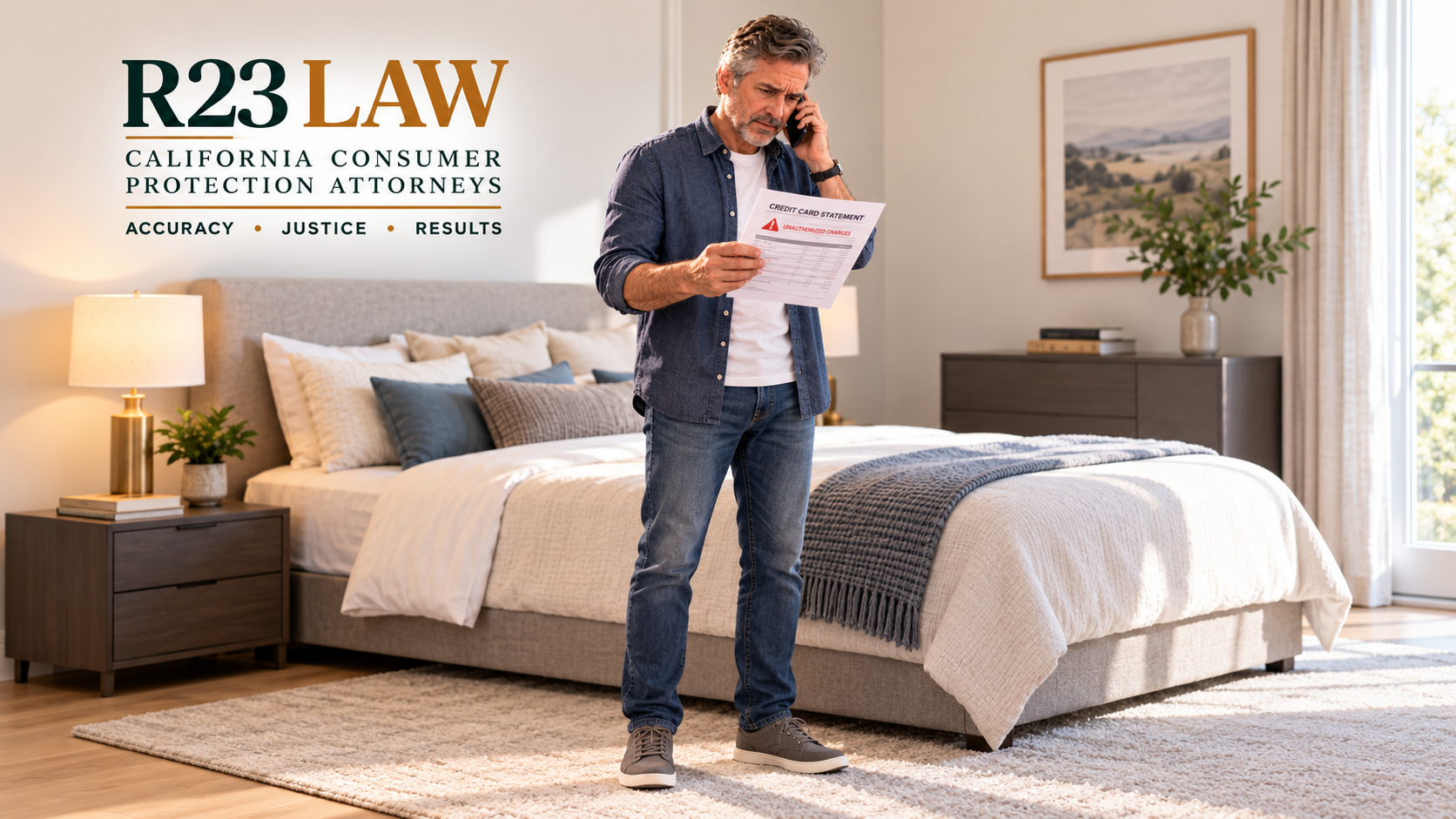
Credit card fraud continues to evolve alongside the technology designed to stop it
Consumers may encounter scams at physical card terminals, through stolen account information, or online transactions that do not require the actual card to be present. Once a scammer gains access to card information, unauthorized purchases can appear quickly and create immediate financial problems.
Understanding common credit card scams can make suspicious activity easier to recognize and give consumers a clearer path when unauthorized charges appear.
SKIMMING CAN STEAL CARD DATA AT THE TERMINAL
One common credit card scam is known as skimming.
Skimming devices may be attached to ATMs, gas pumps, or other card-reading terminals. When a consumer inserts a card, the device can capture the card information and either store it or transmit it to the scammer.
Because the transaction may appear completely normal to the consumer, the theft may not become obvious until unauthorized charges begin appearing later.
Consumers should stay alert when using physical card terminals and regularly review account activity for transactions they do not recognize.
CARD-NOT-PRESENT FRAUD CAN HAPPEN WITHOUT THE PHYSICAL CARD
Another common form of credit card fraud is the card-not-present scam.
In these situations, thieves obtain credit card information through methods such as data breaches, network hacking, or physical theft, then use the information to make online purchases.
Because the physical card is not presented to the merchant, the transaction can be more difficult to verify in the same way as an in-person purchase.
This type of fraud can be especially frustrating because a consumer may still have the card in their possession while fraudulent online purchases are being made elsewhere.
SECURE THE ACCOUNT QUICKLY AFTER DISCOVERING FRAUD
When unauthorized credit card activity appears, acting quickly can be important.
Consumers should contact the credit card issuer to report the suspected fraud, dispute the unauthorized charges, and request a replacement card when appropriate.
The attached source emphasizes these immediate steps because they can reduce the risk of additional fraudulent activity and begin the formal dispute process. What Should I Know About Credit…
Consumers should also preserve records relating to the fraudulent transactions and communications with the card issuer.
THE FAIR CREDIT BILLING ACT PROVIDES IMPORTANT PROTECTIONS
The Fair Credit Billing Act provides federal protections for consumers dealing with certain unauthorized credit card charges and billing errors.
The attached source states that consumer liability for unauthorized charges is generally limited and notes a $50 limit when the consumer contacts the issuer within the described time period, while some card issuers may provide zero-liability protections under their own policies. What Should I Know About Credit…
Consumers should review the card issuer's policies and act promptly when they identify a transaction they did not authorize.
Timeliness can matter significantly in billing disputes.
DISPUTE UNAUTHORIZED CHARGES AND PRESERVE THE RECORD
A credit card fraud dispute should be documented carefully.
Consumers may want to preserve:
Credit card statements showing the unauthorized transactions
Copies of written disputes
Confirmation numbers
Replacement card information
Emails or letters from the card issuer
Notes regarding communications with customer service
Any records showing when the fraud was first discovered and reported
That documentation can become especially important if the issuer later claims the consumer authorized the charges or attempts to hold the consumer responsible.
WHEN THE CARD ISSUER DOES NOT RESOLVE THE PROBLEM
Most consumers expect a credit card company to correct obvious fraud once it is reported.
Unfortunately, disputes do not always end there.
A consumer may encounter an issuer that denies the dispute, continues treating the charges as valid, or attempts to collect amounts the consumer says were unauthorized.
When that happens, the issue can move beyond ordinary account security and become a consumer protection dispute.
Preserving the full history of the claim can help show what the consumer reported, when the issuer received notice, and what happened after the dispute was submitted.
R23 LAW'S EXPERT LEGAL SERVICES FOR CREDIT CARD FRAUD VICTIMS THROUGHOUT CALIFORNIA
R23 Law's California Consumer Protection Attorneys represent consumers dealing with unauthorized credit card charges, disputed transactions, billing problems, and financial institutions that fail to properly address consumer fraud claims.
R23 Law handles consumer protection matters involving credit card fraud, billing disputes, identity theft, inaccurate account information, and related financial harm.
Our attorneys represent consumers who may be facing:
Unauthorized credit card charges
Skimming-related fraud
Card-not-present fraud
Identity theft involving credit accounts
Denied fraud disputes
Incorrect billing responsibility
Continued collection of disputed charges
Potential Fair Credit Billing Act violations
FRAUD MOVES FAST — YOUR PAPER TRAIL SHOULD TOO
Credit card scams can happen at a gas pump, an ATM, through stolen data, or during an online transaction.
When fraud appears, consumers should secure the account, report unauthorized charges, request a replacement card when appropriate, and document every step of the dispute.
A strong paper trail can become especially important when a card issuer refuses to remove fraudulent charges or continues attempting to hold the consumer responsible.
Contact R23 Law Today
Credit card fraud can quickly turn into a larger consumer protection problem when unauthorized charges remain unresolved or a financial institution refuses to properly address a dispute.
R23 Law's California Consumer Protection Attorneys can evaluate the circumstances surrounding disputed credit card activity and the consumer protections that may apply.
Toll-Free: 310-598-1588
SoCal: (310) 598-1588
Email: info@R23Law.com
Website: www.R23Law.com
Address: US Bank Tower, 633 W. 5th Street, 26th Floor, Los Angeles, CA
© 2025 R23 Law. All rights reserved. Trusted consumer credit lawyers in Los Angeles.
